A Homeless Girl Warned Hells Angels Not To Cross Miller Bridge — Then They Found The Trap Waiting In The Snow
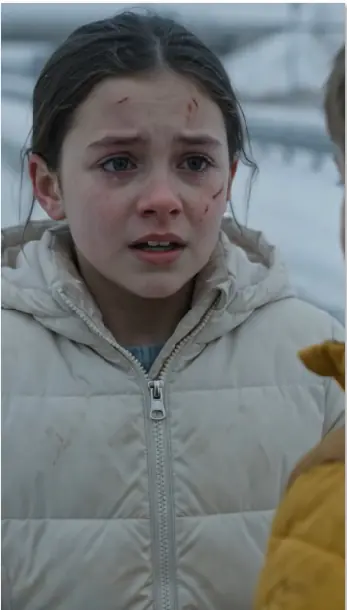
“Don’t go to Miller Bridge!” The scream cut through the winter road like a blade.
Ten motorcycles roared along the deserted highway outside Pittsburgh, their headlights carving bright tunnels through the falling snow. The engines rolled low and heavy over the frozen pavement, the sound bouncing off the guardrails and the black tree line like distant thunder.
The riders wore black leather jackets, heavy boots, and the red-and-white patch that made most people step aside before asking questions.
They were Hells Angels, riding home after a Christmas charity run, their saddlebags still smelling faintly of wrapped toys, canned food, winter coats, and cold highway air.
They had spent the day delivering supplies to three shelter kitchens, two low-income clinics, and a church basement where volunteers handed out hot meals to anyone who came through the door. Most people who saw them on the road that night would not have known that. Most people saw the patches first, then built the rest of the story from fear, rumor, and whatever the news had taught them to believe.
The girl came out of nowhere.
She burst from the darkness beneath an overpass, slipping on the icy shoulder and waving both arms as if she had already accepted that the road might take her. Behind her, a smaller boy stumbled through the snow, clutching a cracked flashlight with both hands.
The lead biker hit the brakes so hard his back tire slid sideways.
The nine riders behind him fanned out with practiced control, engines growling, snow flying beneath their wheels. Tires hissed against ice. Headlights shuddered across the road. For one terrible second, it looked as if the girl would vanish beneath chrome and rubber.
But the lead rider held the bike steady.
The convoy stopped inches from disaster.
The girl stood frozen in the center of the road.
She could not have been more than sixteen.
Her coat was too thin, the kind of coat that might have worked in October but had no business facing a Pennsylvania winter. Her jeans were torn at one knee, and one of her shoes had duct tape wrapped around the toe. Her dark hair was tucked badly under a knit hat, and her face was pale from cold, but her eyes were wild and burning with terror.
The little boy stopped a few steps behind her.
He looked about ten.
His cheeks were red from freezing wind, and his fingers were wrapped around the flashlight so tightly that his knuckles looked white. The weak beam shook across the bikers’ headlights.
The lead rider lifted his visor.
His name was Caleb Mercer, though almost everyone called him Bear. He was fifty-one years old, broad-shouldered, gray-bearded, and built like a man who had spent his whole life being difficult to move. His hands were thick, scarred, and steady on the handlebars. His eyes, pale blue beneath heavy brows, moved from the girl’s torn shoe to the boy’s trembling flashlight to the empty road behind them.
The other riders respected Bear because he did not waste words, and because when he did speak, he usually meant exactly what he said.
“Kid,” Bear called over the engines, “you trying to get yourself killed?”
The girl shook her head hard.
“No,” she gasped. “I’m trying to stop you.”
The bikers exchanged looks.
A younger rider named Diesel killed his engine first, then the others followed. One by one, the mechanical thunder died. The sudden silence made the falling snow seem louder.
Only the ticking of cooling engines and the children’s ragged breathing filled the road.
Bear dismounted slowly.
He kept his hands visible, not because he feared the children, but because he recognized the look in the girl’s eyes. That was not ordinary fear. That was not a kid playing brave or seeking attention. That was the fear of someone who had seen something real and run before her courage could change its mind.
“What’s your name?” Bear asked.
The girl looked over her shoulder toward the overpass.
“Lily.”
“Lily what?”
“Lily Reed.”
Bear looked at the little boy.
“And him?”
“My brother. Mason.”
Mason stepped closer to Lily, half hiding behind her coat.
Bear stepped forward carefully.
“All right, Lily Reed. Tell me why you ran in front of ten bikes in a snowstorm with your little brother behind you.”
Lily swallowed hard.
“Because if you keep going, you’ll hit Miller Bridge in two miles. There are men waiting there. Two vans, one flatbed truck, and a chain stretched low across the road.”
Several bikers stiffened.
Diesel looked toward the dark highway ahead.
“A chain?”
Mason nodded quickly before Lily could answer.
“They put it between the guardrails,” he said, his voice shaking. “Not high. Wheel height. They said if the first two bikes go down, the rest will scatter, and then they can blame everything on you.”
Bear’s expression changed.
Not fear.
Focus.
“What do you mean, blame everything?”
Lily’s lips trembled.
She looked from Bear to the other riders, then back toward the overpass again.
“They’re not just trying to stop you,” she whispered. “They’re trying to make you look guilty.”
A rider named Bishop stepped forward.
Bishop was lean, quiet, and always watching. He had been a mechanic, a locksmith, and half a dozen other things before the club, and nobody in the chapter knew exactly which of his old skills were legal. He crouched down slightly so he was closer to Mason’s height.
“Guilty of what?”
Mason looked at Lily.
Lily tightened her hand around his shoulder.
“The stolen clinic money,” she said. “The missing supply truck. The fire at the warehouse. All of it.”
The words fell into the snow-heavy silence.
Bear glanced at Bishop.
Bishop’s jaw moved once.
For three weeks, local news had been full of stories about a missing donation truck loaded with medical supplies, winter coats, blankets, and food intended for low-income clinics and shelter kitchens across the city. A warehouse tied to the same charity network had burned two nights later. Officials blamed unknown criminal elements, and some news stations hinted that biker groups had been seen near the area.
Bear had ignored it at first.
People blamed bikers for bad weather if it suited them.
But now two homeless children stood in the road with frozen hands and details they should not have known.
Lily pointed toward the overpass.
“We heard them talking under the bridge. They don’t know we sleep there. They said your ride would come through after nine because you always take Route 19 back from the toy run. They said people would believe it because of the patches.”
Diesel cursed under his breath.
Bear lifted one hand without looking back.
Diesel went quiet.
“How many men?” Bear asked.
“Six at the bridge,” Lily said. “Maybe more in the warehouse yard.”
“Armed?”
Lily hesitated.
Mason answered in a small voice.
“I heard metal when they got out. And one of them said nobody fires unless the bikers turn around.”
The riders went still.
The snow fell harder.
Lily wiped her nose on her sleeve and looked at Bear with desperate urgency.
“You can’t go that way. Please. I know people probably think we’re just street kids making up stories, but we’re not lying. I swear we’re not lying.”
Bear studied her for a long moment.
Most people would have dismissed Lily and Mason Reed.
A homeless teenage girl in a torn coat.
A little boy with a broken flashlight.
Two runaway-looking kids shouting about traps and powerful men.
Frightened children with no proof in their hands.
But Bear had lived long enough to know the difference between drama and warning. Lily’s eyes were not asking for attention. They were begging not to be responsible for ten men dying because no one believed her.
Bear turned to Bishop.
“Lights off. Bikes into the old service pullout.”
Diesel looked at him.
“You believe them?”
Bear did not take his eyes off Lily and Mason.
“I believe their fear.”
Within minutes, the ten motorcycles were rolled silently off the highway and hidden behind a line of bare winter trees near an abandoned service road. The riders worked without unnecessary noise, their big bodies moving with surprising discipline.
Lily watched them with wide eyes, as if she had expected them to argue, laugh, or leave her and Mason behind.
Bear came back to her.
“Show us where you heard them.”
Lily shook her head.
“No bikes. Engines carry under the concrete.”
“We walk.”
Mason looked at the ten men.
“Under the bridge is tight.”
Bear glanced at the others.
“Then breathe smaller.”
For the first time, a tiny crack of disbelief crossed Mason’s face.
It almost looked like the beginning of a smile.
Then it vanished.
Lily took Mason’s hand and led them beneath the overpass.
The path dropped through weeds stiff with frost, past broken concrete, rusted shopping carts, and old graffiti half-buried beneath snow. The highway above rumbled faintly whenever a distant truck passed, but down below, the world became colder and quieter.
The bridge supports rose like gray pillars, their bases crowded with trash, torn tarps, and pieces of cardboard flattened into sleeping mats.
Lily moved with the familiarity of someone navigating a bedroom.
Mason followed close behind her, shining the weak flashlight along the ground so none of the bikers stepped on broken glass.
They slipped between two concrete walls and ducked behind a stack of old pallets. There, hidden from the road by shadow and hanging plastic sheeting, was their shelter.
A thin blanket.
Two cans of food.
A cracked backpack.
A flashlight.
A notebook.
A small stuffed dinosaur with one missing eye.
And a plastic bag tied around something square.
Bear stopped at the entrance.
The other bikers stopped behind him.
Lily suddenly looked ashamed.
“It’s not much,” she muttered.
Bear looked at the blanket, the frozen ground, Mason’s shaking hands, and the careful way Lily had arranged the little they owned.
“No,” Bear said quietly. “It’s yours.”
That answer struck Lily harder than pity would have.
She looked away fast.
Bishop crouched near the wall and pointed to the plastic bag.
“That what you wanted to show us?”
Mason nodded.
He untied the bag with numb fingers and pulled out an old tablet, a folded map, and a bundle of papers wrapped in freezer plastic. The tablet’s screen was cracked, but it still turned on when Lily pressed the button.
She swiped through a folder of photos and videos.
The first video showed a warehouse loading bay at night.
Three men moved boxes from a truck into an unmarked van.
The second showed a man in a long coat speaking to another man near a black SUV.
The third was shaky, filmed from behind metal stairs, but the audio was clear enough.
“After the ride. Put the chain up at Miller Bridge. Leave two crates with the club stickers nearby. News will eat it alive.”
A rider behind Bear muttered, “Club stickers?”
Mason reached into the backpack and pulled out a sheet of cheap printed decals.
Red-and-white wings.
Misspelled.
Bad copies of their patch.
Diesel took one and stared at it with disgust.
“They were going to plant these?”
Lily nodded.
“They already planted some at the warehouse after the fire. Mason saw them.”
Bear’s face hardened.
“Who are they?”
Lily pointed at the man in the long coat on the video.
“Frank Ellison. He owns Ellison Freight and half the empty buildings near the river.”
Bishop’s eyes sharpened.
“City council donor Ellison?”
Lily nodded again.
“And the other man?”
Lily’s voice went lower.