Bailiff Ordered a Man Out of the Judge’s Chair — Then the Court Clerk Walked In With His Morning Docket
At 8:37 on Monday morning, Marcus Bennett entered courtroom 3A through the private side door and stood alone beneath the state seal for several seconds.
The room smelled exactly as courtrooms always seemed to smell before people arrived: old wood, paper, carpet cleaner, and faint coffee from somewhere beyond the clerk’s office. Tall walnut panels covered the walls, the American flag stood behind the bench, and rows of polished benches waited empty beneath soft ceiling lights. Marcus placed his leather portfolio on the desk and allowed himself one quiet breath before beginning the first full docket of his judicial career.
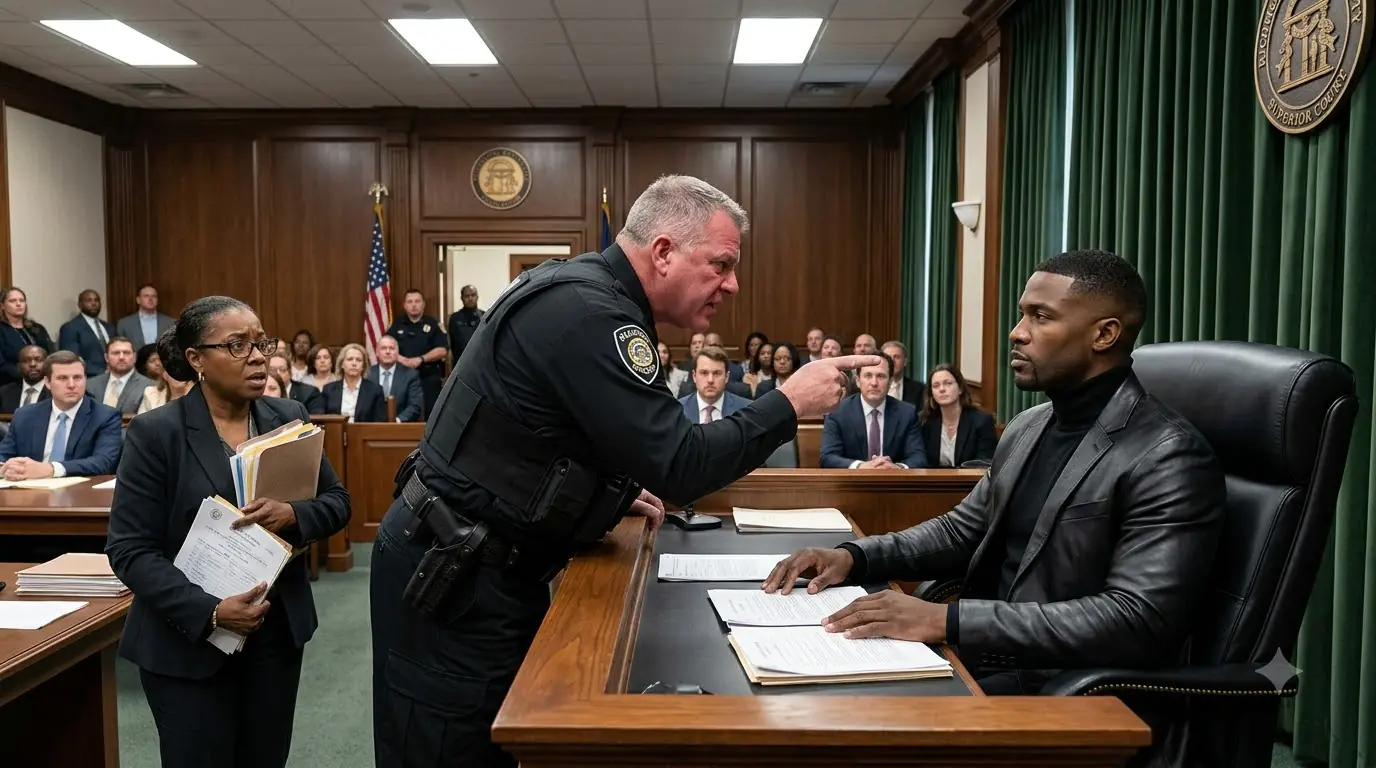
At forty-one, Marcus Bennett was younger than nearly everyone who had previously occupied the bench.
That fact had already generated newspaper stories, courthouse gossip, and more unsolicited advice than he could remember. Some people praised the appointment as overdue generational change. Others quietly questioned whether a former civil-rights attorney and federal prosecutor with only fifteen years in practice had accumulated enough experience to control one of Richmond County’s busiest circuit calendars.
Marcus ignored both groups.
He had not spent fifteen years building a career so that strangers could tell him whether he deserved the final step.
His appointment had been announced six weeks earlier, but this was his first morning actually hearing cases.
The ceremonial photographs had happened Friday.
His mother cried.
His younger sister cried harder.
Marcus had not cried until everyone left and he stood alone inside chambers staring at the black robe hanging from a wooden hook.
He had touched the sleeve.
Then whispered, “Well, Dad.”
His father had died twelve years earlier.
Walter Bennett had spent twenty-eight years driving city buses and telling his son the same thing whenever Marcus complained about studying.
“Get good enough that they have to explain why they overlooked you.”
Marcus hated that advice when he was fourteen.
He understood it now.
He glanced toward the clock.
8:39.
Court began at nine.
Marcus had arrived early because he wanted to review the first several cases without anyone talking to him.
He was dressed casually beneath what would later become his robe: fitted black turtleneck, black trousers, polished boots, and a sleek black leather jacket he planned to hang inside chambers before proceedings began.
His judicial robe remained through the side door.
Marcus sat.
The chair was higher than he expected.
He adjusted it.
Then opened the morning docket.
State v. Porter.
Probation violation.
Ramirez v. Hartford Properties.
Emergency injunction.
Commonwealth v. Tillman.
Bond hearing.
Marcus read quietly.
At 8:42, the main courtroom doors opened.
He barely looked up.
A stocky gray-haired man entered wearing a black courthouse-security uniform beneath a tactical vest.
Marcus recognized the name from staffing emails.
Dale Hensley.
Fifty-six.
Senior bailiff.
Twenty-three years working courthouse security.
Marcus had not met him personally.
Hensley carried a cup of coffee.
He walked three steps into the courtroom.
Stopped.
Looked toward the bench.
Then his expression changed.
Marcus noticed but returned to the docket.
Hensley placed the coffee on a nearby table.
“Hey.”
Marcus looked up.
“Morning.”
Hensley walked toward the bench.
“You lost?”
Marcus almost smiled.
“No.”
“Courtroom isn’t open yet.”
“I know.”
Hensley climbed the small stairs beside the witness stand.
Marcus watched him approach.
“Can I help you?”
Hensley stared at the leather jacket.
Then the turtleneck.
Then Marcus.
“What are you doing?”
Marcus glanced down at the papers.
“Reviewing the docket.”
Something about the answer irritated the older man.
“Get your ass out of that chair.”
Silence.
Marcus did not immediately respond.
He looked at Hensley for nearly three seconds.
It was the kind of pause he had learned as a prosecutor.
People often filled silence with useful information.
Hensley did.
“You hear me?”
“I heard you.”
“Then move.”
Marcus closed the docket.
“Who are you?”
Hensley’s face hardened.
“You’re asking me who I am?”
Marcus looked toward the badge.
“I can read the name.”
“Then you know I’m courthouse security.”
“I do.”
“Good.”
Hensley pointed toward the spectator area.
“Get out from behind the bench.”
Marcus remained seated.
“I think we have a misunderstanding.”
“No misunderstanding.”
“I’m Judge Bennett.”
Hensley stared.
Then laughed.
It was not a confused laugh.
It was dismissive.
“Yeah.”
Marcus raised one eyebrow.
“Yes.”
“Sure you are.”
Marcus leaned back slightly.
“You can verify that very quickly.”
Hensley looked toward the empty courtroom.
“Buddy, I don’t know what game you’re playing.”
“I’m not playing one.”
“You wandered into a restricted courtroom and sat in the judge’s chair.”
“I entered through the chambers door.”
“That doesn’t help your story.”
Marcus stared.
“It should.”
Hensley pointed again.
“Up.”
Marcus stayed still.
“No.”
The word changed the room.
Hensley stepped closer.
Marcus had encountered men like him before.
Not necessarily malicious in every interaction.
Not necessarily violent.
But deeply invested in immediate obedience.
The kind of person who heard a calm refusal and experienced it as personal challenge.
Hensley placed both palms on the bench.
“Listen carefully.”
Marcus did.
“You are sitting where you have absolutely no business sitting.”
Marcus looked toward the brass nameplate positioned at the edge of the bench.
HON. MARCUS BENNETT
It had been installed Friday.
He looked back toward Hensley.
“Read the nameplate.”
Hensley did not look.
“Don’t get smart.”
“Read it.”
“I don’t need to read anything.”
Marcus almost laughed.
“That sentence may become important later.”
Hensley leaned closer.
“What’s that supposed to mean?”
“It means you have several easy methods available to verify the situation, and you’re refusing all of them.”
Hensley straightened.
“I know who belongs behind this bench.”
Marcus’s expression cooled.
“Apparently not.”
The older man’s jaw tightened.
Footsteps sounded behind them.
An attorney entered through the public doors carrying two legal boxes.
She slowed when she saw the confrontation.
Marcus recognized Rachel Kim, a family-law attorney he had appeared against several times before his appointment.
Rachel stared.
“Judge Bennett?”
Marcus looked toward her.
“Good morning, Ms. Kim.”
Hensley turned sharply.
Rachel froze.
The bailiff looked between them.
“You know this guy?”
Rachel’s expression shifted from confusion to disbelief.
“This guy?”
Marcus almost smiled.
Rachel did not.
“That’s Judge Bennett.”
Hensley stared at her.
Then laughed again.
“Very funny.”
Rachel’s mouth opened.
Marcus watched something important happen.
The bailiff had been given corroboration.
Instead of lowering suspicion, he reclassified the new information as part of the deception.
Marcus had seen that pattern professionally.
Once someone became committed to an assumption, contradictory evidence stopped functioning as evidence.
It became conspiracy.
Hensley pointed toward Rachel.
“Sit down.”
She stared.
“Excuse me?”
“I said sit down.”
“I’m counsel in Ramirez.”
“I don’t care.”
Marcus’s voice sharpened.
“Do not speak to counsel that way.”
Hensley turned.
“You are not running this courtroom.”
Marcus’s eyes held his.
“At nine o’clock, that statement becomes remarkably difficult to defend.”
Hensley walked around the side of the bench.
Marcus stood.
The height difference became more obvious now.
Marcus was six feet one.
Athletic but lean.
Hensley was slightly shorter and heavier.
The bailiff interpreted Marcus standing as escalation.
“Sit back down.”
Marcus stared.
“You just spent two minutes ordering me out of the chair.”
“Don’t play games.”
“I’m trying to understand the current instruction.”
Rachel put down her boxes.
“Mr. Hensley, I’m telling you—”
“Stay out of it.”
Marcus looked toward her.
“Ms. Kim, please take your seat.”
Rachel hesitated.
Then obeyed.
Two more attorneys entered.
Then several spectators.
The courtroom began filling.
Whispers moved through the room.
Hensley noticed the audience.
That made everything worse.
His authority now had witnesses.
For some men, that created restraint.
For others, retreat became humiliation.
Hensley was the second kind.
He stepped very close to Marcus.
“Last chance.”
Marcus folded his arms.
“For what?”
“Walk out voluntarily.”
“No.”
“I’ll remove you.”
Marcus looked toward the ceiling corner.
A small courthouse camera sat above the jury box.
Another faced the bench.
“Everything you’re doing is being recorded.”
Hensley’s eyes narrowed.
“Threatening me now?”
“No.”
Marcus shook his head.
“I’m reminding you.”
“You think cameras scare me?”
“I hope they make you careful.”
Hensley leaned closer.