The Card on the Counter
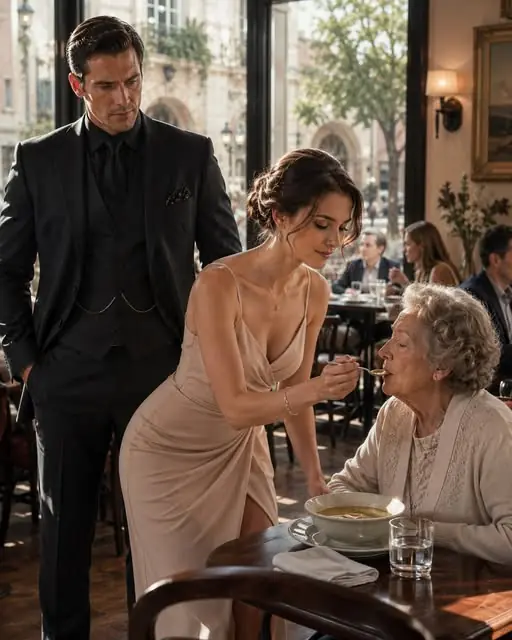
The heavy oak door of Laurel Corner Café chimed softly as Alexander Carter stepped out into the crisp San Antonio afternoon, leaving behind the lingering scents of cilantro, roasted chiles, and damp winter wool.
I stood frozen near the tray-drop station, the business card feeling surprisingly heavy between my thumb and forefinger. It wasn't printed on the cheap glossy stock of the dry-cleaning flyers we kept by the register. It was thick, matte-textured ecru cardstock stamped with silver embossed lettering:
Alexander Carter
Managing Director, Carter Holdings Corp.
Below the title ran a direct private extension and an address on the thirtieth floor of the downtown financial tower overlooking the River Walk.
“What did the suit want, Emily?”
My manager, Brenda, wiped down the espresso machine with a frayed yellow rag, her eyes darting suspiciously toward the glass storefront. Brenda had a heart of gold, but after twenty years in the service industry, she trusted billionaires about as much as a stray cat trusted a terrier.
“He just... asked why I helped his mother,” I murmured, slipping the card into my apron pocket right beside my overdue electric bill.
“Well, don’t go getting grand ideas,” Brenda warned gently, though a small, fond smile twitched at the corner of her mouth. “Men like that don’t wander into greasy spoons looking for charity cases. They’re looking for a distraction. Get back to table four—they’ve been waving their menus for five minutes.”
I nodded and rushed back onto the floor, but my mind was spinning.
The elderly woman—his mother—had left without making a scene, guided out by her son with a tenderness that completely shattered the cold, intimidating aura he had projected from across the dining room. Before walking out, she had pressed something into my palm under the table: a folded twenty-dollar bill wrapped tightly around a napkin with a scribbled note:
Real kindness is the rarest currency in Texas. Do not let the world make you hard.
By the time my double shift ended at nine o'clock, my legs felt like lead weights. The wind off the river had turned biting, cutting straight through my worn denim jacket. I walked the four blocks to my motorcycle—a sputtering, ten-year-old Honda Rebel that sounded like a tin can full of gravel—and strapped my insulated delivery box onto the back rack.
The evening delivery rush was brutal. I spent three grueling hours weaving through downtown traffic, dodging holiday shoppers and impatient pickup trucks, delivering lukewarm tacos and greasy pizza to suburban apartment complexes where tips were non-existent or tossed carelessly onto a doormat. By the time I finally dragged myself up three flights of stairs to my cramped apartment, it was well past midnight.
My roommate, Chloe, was asleep on the lumpy futon in the living room, buried under nursing textbooks and empty coffee mugs.
I tiptoed into our tiny bedroom, stripped off my grease-stained apron, and collapsed onto the edge of my mattress. My right ankle throbbed with a dull, persistent ache from twelve hours on hard tile. Reaching into my pocket, I pulled out the business card and set it on the nightstand beside a glass of water.
Call me tomorrow.
His parting words echoed in the quiet room. Why should I call him? I was just a waitress who had fed a confused old lady. People didn't get rewarded for basic human decency in this city; they got exploited, or worse, forgotten. I told myself I wouldn't do it. I told myself I’d throw the card in the trash come morning and focus on picking up extra shifts to cover the gas bill.
Yet, when my alarm blared at 6:00 a.m., my first instinct wasn't to check my schedule.
It was to reach across the nightstand and pick up the card.
The morning sun was just gilding the limestone facades downtown as I stood outside a public payphone—my own cell line having been disconnected two days prior for an unpaid balance. My fingers trembled slightly as I punched in the ten-digit private number.
It rang once. Twice.
Before the third ring could start, a deep, crisp voice answered.
“Carter.”
I swallowed hard, my throat suddenly dry as bone. “Hello, Mr. Carter. My name is Emily. You... you gave me your card yesterday at Laurel Corner Café.”
There was a brief pause on the line—a mere fraction of a second—before his tone shifted entirely, losing its cold corporate edge and becoming remarkably sharp, focused, and attentive.
“Emily,” he said. Hearing my name on his lips felt heavy and deliberate. “I was wondering when you’d call. Are you scheduled to work today?”
“I have a shift at eleven,” I said, instinctively rising onto my defense. “Look, Mr. Carter, if this is about your mother—she didn't need to pay me back, and I wasn't looking for a tip—”
“This isn't about paying you back,” Alexander interrupted smoothly. “Though she hasn't stopped talking about you since yesterday afternoon. This is about an immediate opening in my executive suite. I require an assistant who possesses two specific qualities: absolute discretion, and a fundamental unwillingness to walk past someone in need. Be at the Carter Holdings building on Houston Street at 9:00 a.m. sharp. Tell security to send you directly to the thirty-fifth floor.”
Before I could draw breath to argue, ask questions, or confess that I had zero corporate experience, the line went dead with a soft click.
I stood in the cold morning air, staring at the receiver resting in my hand.
My life was about to shift on its axis—and I didn't know yet whether it was going to save me, or completely consume me.