The SWAT Team Kicked Down the Clubhouse Door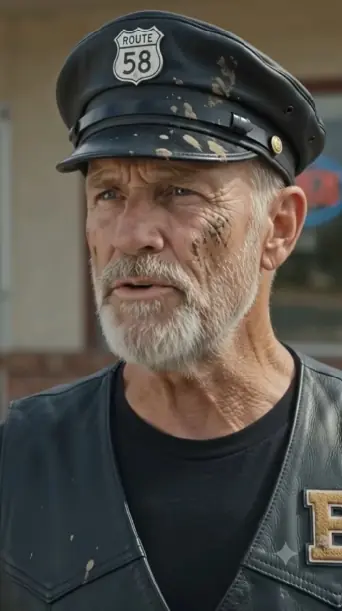
Special Agent Mitchell Harrison of the ATF had spent three years of his life dissolving into the leather seats of a sweltering surveillance van. It was October 2011, and the San Bernardino charter of the Hells Angels had become a fortress of untouchable criminal enterprise.
Harrison’s primary target was the charter president, Arthur Davies. Known on the streets as "Iron Lung" after surviving a brutal stabbing to the chest in the late '90s, Davies wasn't your stereotypical bar-brawling biker. He was a meticulous, calculating tactician who ran his charter with the lethal efficiency of a Fortune 500 company.
For thirty-six agonizing months, Harrison’s task force had nothing to show for their efforts but grainy photographs of leather-clad men drinking beer and riding tight formations down Interstate 15. The bikers were incredibly disciplined. They swept their clubhouse for bugs weekly, utilized burner phones that were meticulously cycled out every forty-eight hours, and communicated primarily through handwritten notes immediately incinerated in an oil drum out back.
Every wiretap they secured yielded cryptic conversations about motorcycle parts and plumbing issues. Every trash pull turned up nothing but empty pizza boxes and receipts from local hardware stores. The San Bernardino charter was a ghost ship sailing in broad daylight, and Harrison was desperate for a breach in their hull.
Every fortress has a weak point. For Arthur Davies, that weak point was a low-level prospect named Jimmy Caldwell, known to the club as "Scrap."
Caldwell had a nasty methamphetamine habit and a mounting debt to a local cartel affiliate—a debt the club strictly forbade him from incurring. When Harrison’s team pinched Caldwell on a routine traffic stop with two ounces of crystal and an unregistered firearm stuffed in his saddlebags, the prospect was looking at a mandatory minimum of fifteen years in a federal penitentiary.
Harrison dragged him into a fluorescent-lit interrogation room and offered him a lifeline: become a confidential informant, give the ATF inside access to Davies's operation, and walk away clean with a new identity. Terrified of the cartel and desperate to avoid prison, Caldwell took the deal.
For six months, Caldwell was the ATF’s golden goose. He wore a wire, burying the microphone deep inside the reinforced stitching of his leather cut. He provided Harrison with the club’s security protocols, the shift rotations of the armed guards on the roof, and the exact layout of the heavily fortified compound. The clubhouse, located in an industrial cul-de-sac, was an absolute compound. It was surrounded by twelve-foot chain-link fences topped with razor wire, its windows bricked over, and its front door a 300-pound slab of reinforced steel that required a hydraulic ram to breach.
Through Caldwell, Harrison finally had a key.
In late November, Caldwell sat in the back of Harrison’s unmarked sedan, shivering violently despite the heater blasting. He handed over a wrinkled, hand-drawn map of the clubhouse’s basement.
"They’re moving something big, Mitch," Caldwell stammered, his eyes darting around the empty parking lot shadows. "Arthur bought a massive shipment out of Nevada. Military-grade. M4 carbines, crates of them. Stolen right off a transport train."
Harrison leaned in, the air catching in his throat.
"They’re bringing them into the basement vault on Thursday night," Caldwell continued, his voice barely above a whisper. "The deal goes down at 2:00 a.m. By Friday morning, they’ll be distributed across state lines. If you’re going to hit them, it has to be Thursday."
Harrison’s heart hammered against his ribs. Illegal, fully automatic military weapons. This wasn't just a drug bust anymore; this was domestic terrorism prevention. This was the career-making case that would finally put Arthur Davies behind bars for the rest of his natural life.
The ATF moved with unprecedented speed. Harrison took the intel straight to federal prosecutor Richard Lindsley, who fast-tracked the warrants. They coordinated with the regional SWAT division, led by a seasoned veteran named Sergeant Gregory Hayes. Hayes was a tactical purist—a man who had executed over two hundred high-risk warrants without losing a single officer.
The planning was obsessive. They pored over Caldwell’s hand-drawn maps, cross-referencing them with city utility blueprints. They mapped out every blind spot in the club’s exterior camera system and drilled the breach sequence in a mock-up facility for three straight days.
"These guys aren't street thugs," Sergeant Hayes told his men in the final briefing, pointing a laser pointer at the mug shot of Arthur Davies. "They are organized. They have military veterans in their ranks. If we give them a three-second window to react, we are going to take casualties. We hit fast, we hit hard, and we dominate the space before they even realize they're under attack."
The raid was officially dubbed Operation Desert Rat.
The staging area was an abandoned warehouse two miles from the clubhouse. At 1:00 a.m. on Thursday, sixty heavily armed tactical officers, ATF agents, and paramedics assembled in the dark. The air crackled with raw, metallic adrenaline. Harrison checked his sidearm, his hands trembling slightly. Three years of his life culminated in this single violent night.
At 2:45 a.m., Harrison received the final encrypted text from Caldwell:
The shipment is in. Vault is locked. Arthur is here.
Harrison gave Hayes the nod. The trap was set.
At exactly 3:00 a.m., the convoy of matte-finished BearCats rolled down the industrial cul-de-sac without headlights, their heavy diesel engines rumbling like distant thunder. The street was dead quiet. A fine layer of California smog hung in the chilly night air.
Two blocks away, an undercover ATF agent dressed as a city utility worker threw a heavy breaker switch, instantly cutting all municipal power to the clubhouse block. The streetlights died. The glowing neon skull in the clubhouse window flickered and vanished.
Sergeant Hayes was the first man out of the lead vehicle. Clad in heavy Kevlar with night vision goggles pulled down over his eyes, he signaled his breach team forward. They moved with lethal, practiced precision. A sniper team was already in position on the roof of a neighboring auto body shop, their thermal scopes trained on the perimeter.
"Perimeter clear. No movement on the roof," the sniper's voice crackled in Hayes’s earpiece.
Hayes found that strange—according to Caldwell’s intel, there were always two armed prospects patrolling the roof. But in the heat of the moment, he pushed the thought aside. The breach team stacked up against the massive steel door. The point man positioned the hydraulic ram, a specialized tool designed to snap deadbolts like dry twigs.
Hayes raised his hand, counting down on his fingers. Three. Two. One.
The ram slammed into the steel door with a deafening metallic crash. The frame groaned, but the door held.
"Hit it again!" Hayes hissed.
The ram struck a second time. The steel buckled. On the third strike, the reinforced hinges sheared off completely, and the 300-pound door crashed inward, throwing up a choking cloud of concrete dust.
"Go, go, go!" Hayes barked.
SWAT operators flooded into the pitch-black hallway, their weapon-mounted flashlights cutting harsh, blinding swaths through the darkness. They tossed flashbang grenades into the main bar area. The explosive concussions shook the foundation of the building, filling the room with blinding white light and acrid smoke.
"Police! Get on the ground! Show me your hands!" the operators screamed, sweeping their rifles across the room, anticipating the chaotic scramble of panicked bikers reaching for weapons.
But as the smoke began to clear, the shouting abruptly died in the throats of the SWAT team.
An eerie, impossible silence descended over the room.
Nobody was scrambling. Nobody was running.
Arthur Davies sat at the head of a long, heavy oak table in the center of the room. Flanking him were twenty-five fully patched Hells Angels. They weren’t asleep. They weren’t surprised. Every single man was sitting perfectly upright in a leather chair.
The room was illuminated not by the SWAT team’s tactical lights, but by a dozen battery-powered camping lanterns placed perfectly along the center of the table. In front of each biker was a steaming mug of coffee.
More chilling than their calm posture were their hands. Every man had his hands placed flat on the table, palms down in clear view. And right next to each man’s right hand sat a registered, legal handgun.
The slides were locked back. The magazines were ejected and placed neatly an inch away. The chambers were visibly empty. They had legally disarmed themselves, brilliantly neutralizing any justification for the police to open fire.
Hayes froze, his rifle trained squarely on Davies’s chest. The tactical manual had no protocol for this. You cannot shoot men who are sitting perfectly still with empty weapons and their hands on the table.
Arthur Davies took a slow, deliberate sip from his coffee mug. He didn't blink at the red laser sight painting his chest. He looked at Hayes, a faint, mocking smile playing on his scarred face.
"You’re a little late," Davies said, his voice a low, gravelly rumble that carried perfectly in the quiet room. "Coffee's getting cold."
"Hands behind your heads. Now!" Hayes roared, trying desperately to regain control of the psychological environment.
Slowly, almost in unison, the twenty-five bikers laced their fingers behind their heads. They didn't resist as SWAT operators moved in, violently pulling them from their chairs and zip-tying their wrists. There was no struggle. There were no insults. It was a terrifying display of pure, synchronized discipline.
Agent Harrison pushed his way through the stack of tactical officers, his eyes wide as he took in the surreal scene. The adrenaline that had been surging through his veins suddenly turned to ice water. Something was horribly, fundamentally wrong.
"Where’s the vault?" Harrison demanded, grabbing Hayes by the shoulder. "The guns are downstairs. We need to secure the basement."
Leaving a squad to guard the compliant prisoners, Hayes and Harrison led a detachment down the narrow concrete stairwell. The door to the basement vault was exactly where Caldwell had drawn it on his map. It was a heavy bank vault door secured by a digital keypad.
"Breach it," Harrison ordered, his voice tight.
The explosive technicians set a thermal cutting charge on the locking mechanism. Sizzling heat chewed through the steel, and with a heavy kick, Hayes pushed the door open.
Harrison rushed inside, sidearm raised, fully expecting to find wooden crates packed with stolen military carbines.
Instead, he found an empty concrete room. There were no guns. There were no crates. The only thing in the center of the room was a single metal folding chair.
Sitting on that chair was Jimmy "Scrap" Caldwell.
He wasn’t dead. He wasn’t even tied up. He was sitting there, deathly pale, shaking violently, staring at a small cassette tape recorder placed on the concrete floor in front of him.
"Jimmy," Harrison breathed, stepping forward and lowering his weapon. "What is this? Where are the weapons?"
Caldwell looked up at the ATF agent, tears streaming down his face, his eyes hollow with terror. "There were no weapons, Mitch. There was never a Nevada shipment."
Harrison’s stomach dropped into a bottomless abyss. "What are you talking about? You gave us the intel. You gave us the time."
"Arthur knew," Caldwell sobbed, burying his face in his hands. "He knew I was wearing a wire since month two. He found the transmitter. He didn't kill me... he kept me alive to feed you this."
Harrison stared at the informant, the catastrophic reality crashing down on him. Millions of taxpayer dollars, months of federal resources, dozens of SWAT officers, and a destroyed front door—all based on a fabricated lie fed directly into their ears by the target himself.
Caldwell pointed a trembling finger at the floor. "He left that for you."
Harrison stepped forward and crouched beside the cassette player. He pressed the mechanical PLAY button. A hiss of static filled the concrete vault, followed by the deep, unmistakable rumble of Arthur "Iron Lung" Davies.
“Agent Harrison. I imagine you’re looking at an empty room right now. You spent three years trying to look inside my house, so I decided to invite you in. But you see, by acting on Scrap’s little fairy tale, you've just proven to a federal judge that your star informant is a completely unreliable liar. Any testimony he gives about me or my club is now legally worthless. You burned your own case, Mitchell. Now, get out of my house, and send me the bill for the door.”
The tape clicked off, leaving nothing but the sound of Jimmy Caldwell's quiet sobbing echoing off the empty concrete walls. Harrison stood up in the silent vault, realizing the ghost ship hadn't just sailed past them—it had dragged them straight to the bottom of the ocean.