They Sent Him to Row 31 Because He Didn’t Look Rich Enough. By Sunrise, the Airline Would Be Living Under His Rules.001
They studied the gray sweater, the worn brown shoes, and the faded canvas bag—and decided the man sitting in 2A could not possibly belong there.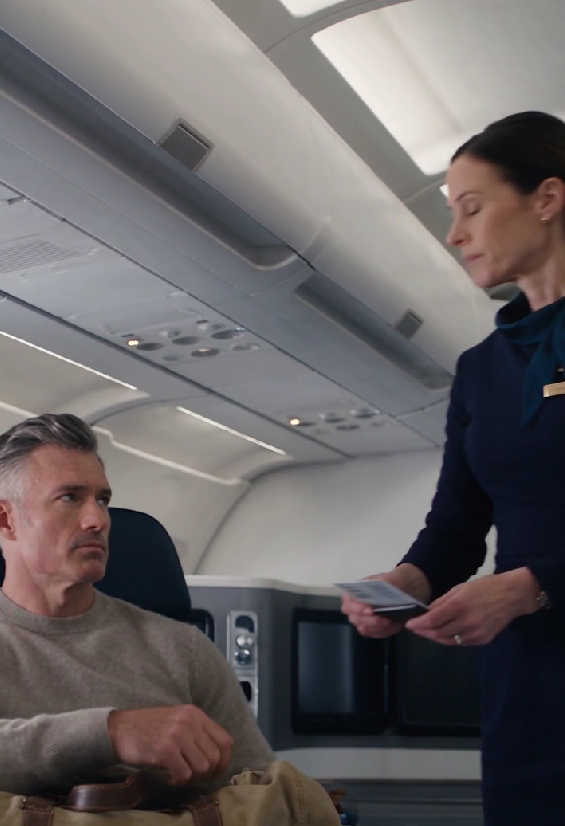
Adrian Cole did not argue.
He did not raise his voice, threaten anyone, or demand a supervisor.
After fifty-two years of life, he had discovered that silence unsettled people far more efficiently than anger ever could.
Anger was useful to institutions. A raised voice could be documented. A complaint could be categorized. A frustrated passenger could be labeled difficult, emotional, aggressive, unreasonable. Once someone became a problem in a report, the people writing the report rarely needed to question themselves.
AdvertisementSilence was different.
Silence gave people nowhere to hide from the sound of their own decisions.
So when the flight attendant leaned over seat 2A and looked down at him with professional politeness that did not quite reach her eyes, Adrian simply opened his own eyes.
“Sir, I don’t believe this is your seat.”
The first-class cabin smelled of fresh coffee, warm leather, and a floral fragrance the airline misted through the air before premium passengers boarded. Beyond the oval window, Dallas-Fort Worth shimmered beneath a washed-out afternoon sky. Luggage tugs crawled across the concrete like beetles, while aircraft tails stood in orderly rows beyond the glass.
AdvertisementAdrian had slept badly the night before.
Then again, Adrian had slept badly for three years.
Sleep had changed the Wednesday morning in March when Claire died at 6:12 a.m. in a hospital room so white and silent that he had hated the color ever since.
Before Claire, sleep had been ordinary. You became tired. You went to bed. Morning arrived.
After Claire, sleep became a negotiation.
Four hours on a good night.
Two on a bad one.
AdvertisementSometimes none.
Some nights Adrian sat at the kitchen table until sunrise with a cup of tea turning cold between his hands while Claire’s reading glasses remained folded beside a stack of novels he had never moved.
That morning, he had dressed without thinking about any of it.
Gray sweater.
Dark trousers.
Old brown shoes, still polished, though the leather had softened around the edges.
The canvas bag Claire had bought him in Maine because she had once told him, laughing, that even a man determined not to care about appearances deserved one respectable bag.
AdvertisementHe had a meeting in Chicago four hours from now.
The meeting mattered.
Not because of money.
Money had ceased feeling like an object to Adrian many years earlier. At a certain level of wealth, it became more like atmosphere—always present, rarely discussed, silently assumed by everyone who lived inside it.
The meeting mattered because Meridian Aviation Group, the company Adrian controlled, was preparing a major overhaul of customer service standards across the commercial airline in which Meridian had acquired a controlling stake two years earlier.
AdvertisementAdrian had requested performance reports.
The reports had been excellent.
Reports usually were.
That was precisely why he had booked this ticket himself through the ordinary corporate travel system.
No entourage.
No assistant calling ahead.
No special note attached to the reservation.
No chief executive officer warning the airport that the controlling owner of Meridian Aviation Group would be traveling.
He wanted to see what passengers saw.
Not board members.
Not investors.
Not senior executives.
Not consultants carrying lanyards and laminated permission.
AdvertisementPassengers.
He had not expected special treatment.
He had expected procedure.
That assumption would prove to be his mistake.
The first-class cabin continued filling around him.
A silver-haired man wearing a tailored navy suit settled into 3A and opened a newspaper with the confidence of someone who still believed printed paper made a man appear serious.
Across the aisle sat a woman in a cream blazer, diamond studs, and a watch Adrian recognized because Meridian once leased aircraft to the founder of the company that manufactured it.
AdvertisementShe looked briefly at Adrian.
Not his face.
His sweater.
Then his canvas bag.
Then away.
A younger man in a fitted charcoal suit passed with a laptop case pressed against his side. He checked the row number, checked Adrian, looked at the overhead compartment, then checked Adrian again.
Nobody spoke.
First class had its own language.
Silence was one of its favorite sentences.
Patricia Hale approached carrying a tray of pre-departure drinks.
She was in her late forties and carried herself with the polished calm of someone who had spent years learning how to make pressure look effortless. Her hair was arranged in a flawless knot. Her lipstick was perfect. The silver wings on her uniform caught the cabin lights whenever she moved.
Patricia knew the Dallas-to-Chicago premium route almost as intimately as some people knew the neighborhoods where they had grown up.
She knew who wanted champagne before departure.
She knew who preferred sparkling water with lime.
She knew which passengers expected to be recognized by name.
She knew which ones preferred the luxury of pretending they were invisible.
When she reached the man in 3A, her face warmed.
“Good afternoon, Mr. Latham. Champagne today?”
“Always.”
He did not even look up from the newspaper.
AdvertisementPatricia laughed softly as though he had said something unexpectedly charming.
She offered orange juice to the elderly couple in row 1, slipped a napkin beneath the woman’s glass without being asked, and assured the young executive that his coat could be hung as soon as boarding finished.
Then Patricia reached Adrian.
Her eyes paused.
First on the sweater.
Then the shoes.
Then the canvas bag.
The tray remained in her hands.
She offered him nothing.
“Sir.”
The word was respectful.
AdvertisementThe tone was not.
Adrian opened his eyes fully.
“Yes?”
“May I see your boarding pass?”
Adrian reached into the front pocket of his sweater and handed it to her.
Patricia accepted the pass between two fingers.
It had been folded once.
Dallas-Fort Worth to Chicago O’Hare.
Boarding Group 1.
Seat 2A.
Cole, Adrian.
Patricia looked at the pass.
Then Adrian.
Then the pass again.
“There appears to be some confusion.”
“There isn’t.”
The smile on Patricia’s face narrowed slightly.
Advertisement“I’m going to need you to step into the galley while we verify this.”
“You can scan it here.”
Her eyes hardened by a fraction.
“I’m aware of how verification works, sir.”
Behind her, Mr. Latham lowered his newspaper by perhaps half an inch.
The woman in the cream blazer stopped scrolling on her phone without lifting her gaze.
Adrian studied Patricia’s face.
She remained composed, but the muscles beside her jaw had tightened.
He recognized the expression.
She had reached a conclusion first.
AdvertisementNow she was searching for a procedure that would make the conclusion appear justified.
Adrian could have ended everything immediately.
He could have told her exactly who he was.
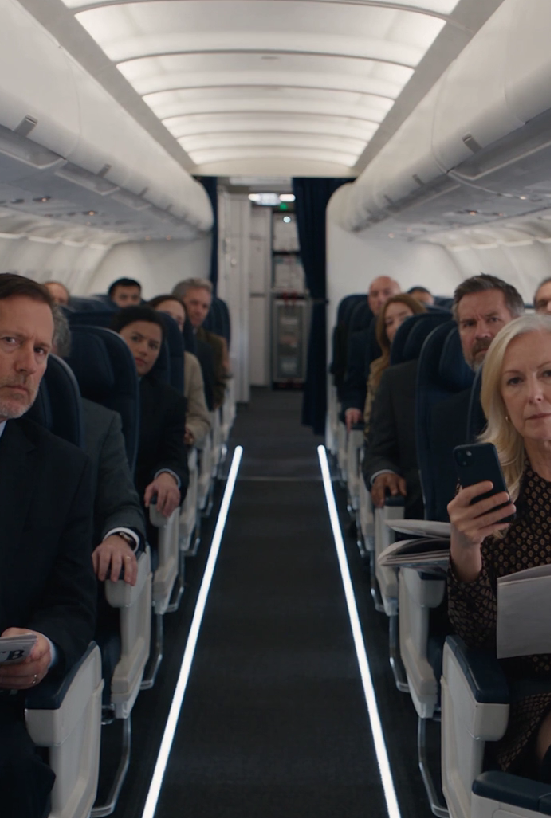
He could have watched the cabin transform.
He could have watched apologies bloom like flowers placed on a theater stage—beautiful, immediate, expensive, and meaningless.
He could have returned to his seat, accepted coffee, reached Chicago on schedule, and added one more discreet note to a corporate report about premium-cabin bias.
AdvertisementBut then he would learn only how employees treated Adrian Cole.
He wanted to know how they treated someone they believed did not matter.
So Adrian released his seat belt.
“Of course.”
Patricia led him toward the forward galley.
She walked a few steps ahead with the contained authority of someone escorting an inconvenience away from paying customers.
The galley was bright, narrow, and slightly warmer than the cabin. Metal cabinets lined the walls. Service carts clicked softly when the aircraft shifted beneath them. The air smelled faintly of coffee grounds and reheated bread.
AdvertisementPatricia continued holding his boarding pass.
She did not scan it.
She did not open her tablet.
She did not contact the gate.
Instead, she lowered her voice.
“Sir, I’m going to be honest with you. We occasionally have passengers who try to move into premium seats after boarding begins. It happens more often than people realize.”
“I did not move.”
“I understand that is what you’re saying.”
“You still haven’t scanned the pass.”
Her professional smile hardened.
“I’d like you to return to your assigned seat in the main cabin while we sort this out.”
AdvertisementAdrian looked down the aisle toward 2A.
His seat.
His bag remained underneath it.
His jacket was folded over the armrest.
“2A is my assigned seat.”
“We can discuss that after departure.”
Adrian looked back at her.
“After departure?”
“Yes, sir.”
“So you want me to surrender the seat first, then prove afterward that I deserved to be there.”
Something flickered behind Patricia’s eyes.
Only for a moment.
The truth often produced small reactions.