His eyes remained fixed on the screen.
Harlan had gone completely white.
And Marcus finally understood why.
The first name on the recovered list belonged to someone he had buried three years ago.
The first thing Vanessa Brooks noticed was not Officer Brandon Keller’s badge.
It was the way he looked at the SUV.
Then at her.
Then back at the SUV.
The judgment happened before either of them spoke.
Vanessa stood beside the parked black luxury vehicle outside an upscale Virginia shopping center, one hand holding her keys and the other resting near the strap of her bag.
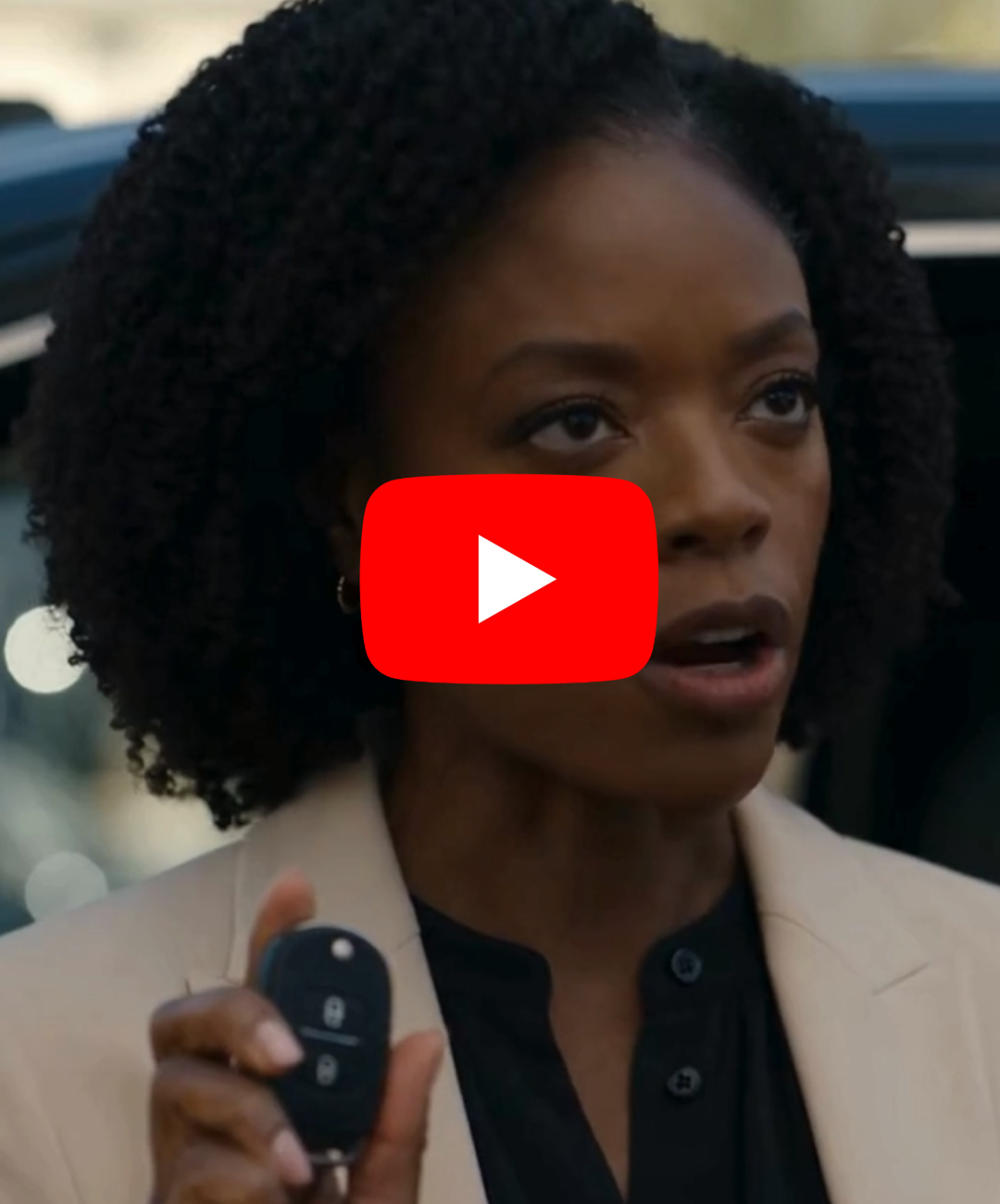
She had finished what should have been an ordinary stop.
No argument.
No disturbance.
No reason for anyone to approach her.
Then Keller’s voice cut across the parking lot.
“Take your hands off that expensive SUV!”
Vanessa turned.
Two uniformed officers were walking toward her.
Keller was in front.
His partner followed several steps behind.
Vanessa looked down briefly at the keys in her hand.
Then back at him.
Keller continued.
“Women like you don’t belong in this neighborhood.”
For one second, Vanessa said nothing.
There are insults designed to start arguments.
There are also statements that reveal more about the person saying them than any argument ever could.
Vanessa understood the difference.
So she did not raise her voice.
She did not move toward him.
She simply lifted the keys slightly.
“Officer, this vehicle belongs to me.”
Keller laughed.
Loud enough for his partner to hear.
Loud enough for nearby shoppers to turn.
“Sure it does.”
He looked at the SUV again.
“And I’m the President.”
His partner smirked.
Then added:
“Probably borrowed it from somebody she works for.”
Vanessa took one slow breath.
She had spent years learning not to let another person’s aggression dictate her behavior.
Especially when badges were involved.
Especially when witnesses were watching.
“My name is Vanessa Brooks.”
She kept her voice even.
“I’m asking you to stop harassing me.”
Keller’s expression changed instantly.
Not because she had insulted him.
Because she had challenged his authority.
He stepped closer.
“Don’t you dare tell me how to do my job.”
Vanessa could smell coffee on his breath.
She could see the name on his badge clearly now.
KELLER.
She made herself remember it.
Brandon Keller.
His partner stayed slightly behind him.
No attempt to intervene.
No attempt to slow the encounter.
Vanessa glanced toward the storefronts.
A woman carrying shopping bags had stopped walking.
A man near another vehicle was watching.
There were witnesses.
Good.
Then Keller raised his hand.
And slapped her across the face.
The sound cracked across the parking lot.
Someone gasped.
Vanessa staggered sideways and caught herself against the SUV.
For a moment, the world narrowed.
Heat spread across her cheek.
Her ears rang.
Every instinct in her body told her to move.
Instead, she stayed still.
She did not strike back.
Did not scream.
Did not give Keller the reaction he seemed to expect.
She straightened.
Looked directly at the badge again.
Then at his face.
“Officer Keller.”
Her voice was quieter now.
“You just made a very serious mistake.”
He laughed again.
“You think anyone will believe you over me?”
That sentence mattered.
Maybe more than he understood.
Keller reached for her wrist.
Vanessa moved only enough to protect her balance.
He grabbed her.
Hard.
Then shoved her toward the SUV.
Her shoulder struck the side of the vehicle.
“Hands behind your back.”
Vanessa turned her head slightly.
“Before you do that, I suggest you contact your supervisor.”
Keller leaned closer.
“Lady, I don’t take orders from people like you.”
Vanessa went very still.
People like you.
There it was again.
Clear.
Unhidden.
His partner heard it.
The shoppers heard it.
And something else heard it too.
Inside the SUV, authorized surveillance equipment was running.
Audio.
Video.
Multiple angles.
Keller had no idea.
He also had no idea who Vanessa Brooks was.
That ignorance was the only reason the encounter had developed this far.
Vanessa was not simply a shopper standing beside an expensive car.
She was Special Agent Vanessa Brooks.
A senior FBI investigator.
And for months, she had been working on a federal corruption investigation involving local law enforcement.
The SUV beside her was part of that operation.
The equipment inside it was not there because she expected a confrontation in a shopping-center parking lot.
It had been configured for another purpose entirely.
Yet now it was recording Keller.
His words.
His physical contact.
His partner’s reaction.
Everything.
Vanessa understood how quickly complicated investigations could collapse when someone revealed too much too early.
So she did not announce her title.
She did not reach for credentials.
She did not tell Keller he was standing beside federal equipment.
She gave him something simpler.
A chance to stop.
He refused.
Keller pulled one handcuff from his belt.
The metal clicked.
His partner glanced toward him.
For the first time, the smirk disappeared.
Maybe the situation was becoming uncomfortable even for him.
Vanessa kept her voice level.
“Contact your supervisor.”
Keller shook his head.
“No.”
“You should.”
“I said hands behind your back.”
He reached for her again.
Then the radio on his shoulder crackled.
Static.
A dispatcher’s voice.
“All units, stand down immediately.”
Keller froze.
The parking lot seemed to freeze with him.
The voice continued.
“Repeat, stand down. Do not detain the woman beside the black SUV.”
Keller looked at his radio.
“What?”
The dispatcher answered immediately.
“Federal operation in progress. Supervisory command confirms immediate stand-down.”
His partner stepped backward.
Not much.
One step.
But Vanessa noticed.
Keller stared at her.
The handcuffs remained in his hand.
His expression had changed.
Confusion first.
Then calculation.
Vanessa slowly straightened her jacket.
The side of her face still burned.
“Now.”
She said quietly.
“I believe your radio gave you an instruction.”
Keller did not move.
For a second, Vanessa wondered whether he might ignore even that.
Then three dark, unmarked vehicles entered the parking lot.
They did not arrive dramatically.
No sirens.
No screeching tires.
They simply turned in, moved toward the black SUV, and stopped with the efficiency of people who already knew exactly where they were going.
Doors opened.
Federal agents stepped out.
Keller’s partner moved farther away.
Keller finally loosened his grip.
A senior FBI supervisor approached.
His face gave away nothing.
“Officer Keller.”
Keller looked at him.
“Release her.”
The hand around Vanessa’s wrist opened.
She stepped away from the SUV.
Keller stared.
“Who is she?”
The supervisor looked directly at him.
“Special Agent Vanessa Brooks.”
Keller said nothing.
Then the supervisor added:
“She’s the lead federal investigator on the corruption case involving your precinct.”
Whatever color remained in Keller’s face disappeared.
His partner looked at him.
Then at Vanessa.
Then away.
The handcuffs lowered slowly toward Keller’s side.
Vanessa rubbed her wrist once.
Not dramatically.
Just enough to feel how much it hurt.
The supervisor came closer.
“You all right?”
“Yes.”
He looked at her cheek.
“Medical?”
“Later.”
Vanessa turned toward the SUV.
“Did we capture everything?”
“Yes, ma’am.”
“Audio?”
“Yes.”
“Video?”
“Multiple feeds.”
Vanessa nodded.
That mattered.
Not because she needed revenge.
Because memory becomes contested the moment consequences arrive.
Keller could say he never slapped her.
He could say she resisted.
He could say he misunderstood.
His partner could suddenly remember events differently.
Witnesses could become uncertain.
But the equipment inside the SUV did not care who wore a badge.
It recorded what happened.
Vanessa looked back toward Keller.
He was no longer laughing.
At least not yet.
The senior supervisor signaled toward another agent.
“Preserve the recordings immediately.”
“Yes, sir.”
Keller finally found his voice.
“This is ridiculous.”
Nobody answered him.
“I had probable cause to investigate.”
Vanessa looked at him.
“For what?”
He opened his mouth.
Nothing came out immediately.
That silence was revealing.
Keller glanced toward the SUV.
“You looked suspicious.”
“How?”
“You were around an expensive vehicle.”
“I was unlocking my car.”
“We didn’t know that.”
“I showed you the keys.”
Keller looked toward his partner.
His partner suddenly seemed very interested in the pavement.
Vanessa continued.
“What crime were you investigating?”
Keller’s jaw tightened.
“I don’t have to explain myself to you.”
The supervisor stepped closer.
“Actually, you’re going to explain the entire encounter.”
Keller looked at him.
Then at Vanessa.
“But not here.”
The supervisor added.
“Not right now.”
That was the correct answer.
Vanessa appreciated it.
A parking lot was not the place to litigate everything that had happened.
Statements would be taken.
Video preserved.
Witnesses identified.
The local department would be notified through proper channels.
Federal personnel would document what had intersected with the larger corruption investigation.
And Vanessa would have to separate something almost impossible to separate emotionally.
What had happened to her personally.
And what it might mean professionally.
Because Keller was not merely an officer who had assaulted a federal agent during an ugly roadside encounter.
He belonged to a precinct Vanessa was already investigating.
That changed the significance of every word.
She looked at him.
Did he know her?
Had this really been random?
His behavior suggested he did not recognize her.
But behavior could be staged.
The thought came automatically.
Vanessa did not trust it yet.
Investigators learn to distinguish suspicion from evidence.
You are allowed to notice patterns.
You are not allowed to turn them into facts just because they fit.
So she kept the question to herself.
One of the agents opened the SUV.
Another began securing the recording system.
The nearby shoppers were still watching.
Some had phones out now.
Vanessa noticed that too.
Keller noticed.
His expression hardened.
“You’re making this look worse than it was.”
Vanessa almost laughed.
She didn’t.
“You slapped me.”
“You were being uncooperative.”
“I was standing beside my own vehicle.”
“You were argumentative.”
“I gave you my name.”
“You were refusing instructions.”
“What instruction did I refuse before you struck me?”
Again, silence.
The supervisor raised one hand.
“Agent Brooks.”
She stopped.
He was right.
Enough.
Preserve facts first.
Arguments later.
Vanessa stepped back.
Her cheek throbbed.
The adrenaline was beginning to shift.
She could feel the tremor in her hands now.
Not fear exactly.
The delayed physical response that comes after the body realizes the immediate threat has passed.
She closed her fingers once.
Opened them.
Then the supervisor took a sealed folder from one of the federal vehicles.
That changed everything.
Vanessa knew the folder.
Not its contents.
The protocol.
Restricted operational material.
Information significant enough not to be transmitted casually.
He looked at her.
“Agent Brooks.”
His tone was different.
The parking-lot confrontation temporarily disappeared from her mind.
“What happened?”
“We have an update on the missing evidence.”
Vanessa glanced instinctively toward Keller.
He appeared to be listening.
The supervisor moved slightly closer and lowered his voice.
“We identified the officer connected to it.”
Vanessa took the folder.
The corruption case had begun months earlier with discrepancies that looked small.
Evidence records that did not match.
Items logged in one place and transferred somewhere else.
Chain-of-custody entries created late.
Witness statements that changed after contact with specific local officers.
At first, each problem could be explained separately.
Paperwork.
Poor supervision.
Mistakes.
Then the pattern emerged.
Certain evidence connected to certain investigations had a habit of becoming less useful before reaching prosecutors.
Sometimes it disappeared completely.
The federal team had been trying to determine whether the failures were incompetence or something organized.
Vanessa had stopped believing in coincidence weeks earlier.
Still, knowing corruption existed and identifying the people responsible were very different problems.
She opened the folder.
A photograph sat near the top.
Vanessa looked at it.
Then stopped.
“No.”
The supervisor said nothing.
She looked again.
A uniformed officer.
Familiar face.
Someone attached to a sensitive portion of the operation.
Vanessa felt a cold pressure move through her chest.
“That’s not possible.”
The words came quietly.
The supervisor watched her.
“He was supposed to be protecting our witness.”
“I know.”
Vanessa looked up.
“Where is the witness?”
The answer did not come quickly enough.
That was all she needed to know.
“Where?”
The supervisor moved closer.
“The witness disappeared twenty minutes ago.”
The parking lot suddenly felt much colder.
Vanessa looked at the photograph again.
Then at the time.
Twenty minutes.
Her mind began building the timeline automatically.
The witness.
Protective assignment.
Missing evidence.
Officer identification.
Her own encounter with Keller.
Was there overlap?
Maybe.
Maybe not.
She refused to make the leap without evidence.
Still, her instincts were screaming.
“Last confirmed contact?”
The supervisor answered.
“Less than an hour ago.”
“Vehicle?”
“Still being checked.”
“Phone?”
“Offline.”
“Was there a distress signal?”
“Nothing.”
Vanessa lowered the folder.
Behind her, Keller shifted his weight.
A tiny sound.
Shoe against pavement.
She turned.
He was watching her.
His face had changed again.
The panic from the radio order was gone.
So was the embarrassment.
For the first time since the federal vehicles arrived, he looked almost calm.
Too calm.
Vanessa studied him.
She did not accuse him.
Not yet.
The senior supervisor noticed where she was looking.
“What?”
Vanessa kept her eyes on Keller.
“He heard us.”
The supervisor turned slightly.
Keller shrugged.
“I don’t know what you’re talking about.”
Vanessa said nothing.
He had been frightened seconds earlier.
Now something had restored his confidence.
What?
She thought about the timing.
Twenty minutes.
How long had Keller been in the parking lot?
How long had he been watching her before approaching?
Had he stopped her because of prejudice and arrogance alone?
That remained completely plausible.
His own words had already documented that much.
But the federal case changed the context.
If Keller knew anything about the operation, harassing Vanessa could have served another purpose.
Delay.
Distraction.
Testing whether she would reveal herself.
Again, possibilities.
Not facts.
She forced herself to stay disciplined.
The supervisor looked toward two agents.
“Separate the officers.”
Keller’s partner looked alarmed.
“What?”
“You’ll each be spoken to independently.”
“We didn’t do anything.”
The supervisor did not respond.
One agent guided Keller’s partner several yards away.
Keller remained where he was.
His eyes stayed on Vanessa.
Then he smiled.
Small.
Barely there.
But unmistakable.
Vanessa felt something cold move through her.
Not because the smile was threatening on its own.
Because it made no sense.
A few minutes earlier, Keller had learned he had struck the lead federal investigator on a corruption case involving his own precinct.
His actions were recorded.
Federal agents surrounded him.
Any reasonable officer in that position would be worried.
Angry, perhaps.
Defensive.
But relieved?
No.
Yet Keller looked as though he knew something Vanessa did not.
The supervisor followed her gaze.
“Agent?”
Vanessa handed him the folder.
“Don’t let him leave.”
Keller laughed softly.
There it was.
That confidence again.
“You people really have no idea what you’re dealing with.”
The supervisor stepped forward.
“What does that mean?”
Keller shrugged.
“Nothing.”
Vanessa watched his face.
“Where is the witness?”
He looked at her.
“Why would I know?”
“I didn’t say you did.”
His smile faded slightly.
Good.
Vanessa continued.
“You volunteered the answer.”
Keller’s partner looked over from several yards away.
The supervisor said:
“No more questions here.”
Again, correct.
Vanessa stopped.
She hated it.
But correct procedure mattered more when the case became personal, not less.
A bad interview could contaminate evidence.
An emotional accusation could tell Keller what investigators knew.
If he was involved.
If.
That word mattered.
Vanessa turned away from him.
The federal agents continued securing the SUV.
One copied the surveillance data onto protected storage while another documented the equipment.
Everything from the slap to the radio call was being preserved.
Vanessa touched her cheek lightly.
Pain flared.
She thought about what Keller had said before he hit her.
You think anyone will believe you over me?
He had asked it with absolute confidence.
Not:
Nobody saw.
Not:
You can’t prove it.
Believe you over me.
That mindset was bigger than one assault.
It assumed the badge controlled the story.
Vanessa had spent enough time investigating corrupted systems to know how dangerous that assumption became when colleagues supported it.
Her attention moved toward Keller’s partner.
The man who had smirked.
The man who suggested Vanessa borrowed the SUV from an employer.
The man who had watched Keller escalate.
What would he say now?
Would he describe the slap accurately?
Would he remember hearing “people like you”?
Would he suddenly claim Vanessa had been aggressive?
The video would answer what it could.
But video did not replace investigation.
It anchored it.
Vanessa looked toward the storefront.
The woman who had gasped was still nearby.
A federal agent was already speaking with her.
Good.
Independent witness.
Another shopper appeared to have recorded at least part of the encounter on a phone.
Good.
Multiple sources.
Vanessa’s mind kept categorizing evidence because the alternative was thinking about the missing witness.
The person who had trusted them.
The person they had promised to protect.
She turned to her supervisor.
“We need to move.”
“We are.”
“No.”
She lowered her voice.
“I mean now.”
“You were just assaulted.”
“I’m functional.”
“You need to be examined.”
“After we locate the witness.”
The supervisor looked at her cheek.
“Vanessa.”
She knew that tone.
Not command.
Concern.
“I’m not pretending this didn’t happen.”
She said.
“Document the injury. Photograph it now.”
He nodded.
“But the witness has already been missing twenty minutes.”
“Longer now.”
Exactly.
Every minute mattered.
Vanessa looked at the photograph in the folder again.
The identified officer.
Someone she had trusted enough to be near the protected witness.
“How certain is this identification?”
“Strong enough that I brought it directly to you.”
“Source?”
“Multiple.”
“Does he know we know?”
“We don’t think so.”
Vanessa glanced toward Keller.
“And Keller?”
“No confirmed connection yet.”
That was the answer she expected.
No confirmed connection.
Good.
Keep it that way until evidence changed it.
Yet the smile remained in her mind.
She looked again.
Keller was speaking quietly with an agent now.
His face had gone neutral.
Professional.
Almost offended.
If Vanessa had not experienced the earlier version of him herself, she might have believed this one.
That was the frightening part.
People could change presentations faster than facts could catch up.
Vanessa remembered his laughter after she said the SUV belonged to her.
His partner’s comment.
The slap.
The wrist grab.
The threat implied in his certainty that nobody would believe her.
All of it documented.
Whatever happened next in the corruption case, that encounter now existed independently.
Keller could not erase it.
The supervisor held out a small evidence camera.
“We need images of your injuries before you leave.”
Vanessa nodded.
She stood beneath the parking-lot lights.
One photograph.
Then another.
Her cheek.
Wrist.
The spot where her shoulder had struck the SUV.
Uncomfortable.
Necessary.
The same process she had required for victims in countless other investigations now applied to her.
That felt strange.
Humbling.
She realized how exposed people must feel when strangers ask them to stand still while pain is photographed and labeled.
She had known that intellectually.
Experiencing it was different.
The agent finished.
Vanessa lowered her sleeve.
“What about Keller’s body camera?”
The supervisor glanced toward him.
“Already requested.”
“Partner’s too.”
“Yes.”
“Dispatch audio?”
“Being preserved.”
“Original stand-down authorization?”
“Yes.”
She nodded.
Every layer.
Because if corruption was involved, internal systems could not be treated as automatically safe.
Preserve outside copies early.
That lesson had already become central to their investigation.
Vanessa looked at her SUV.
There were fingerprints on the paint where Keller had pushed her.
Probably useless as proof of anything significant.
Still, photograph first.
Decide relevance later.
An agent was already doing it.
Good team.
Then a notification sounded from the supervisor’s phone.
He looked.
His face tightened.
Vanessa saw it instantly.
“What?”
He turned the screen toward himself.
“Possible movement connected to the witness.”
“Where?”
“Not confirmed.”
“Tell me.”
“A traffic camera picked up a vehicle matching the description.”
“How long ago?”
“Twelve minutes.”
“Direction?”
He gave it.
Vanessa’s mind immediately mapped possibilities.
Roads.
Exit routes.
Places someone might transfer vehicles.
The investigation came roaring back to full speed.
For a few seconds, Keller almost disappeared from her attention.
Almost.
Then his voice came from behind them.
“You won’t find him.”
Vanessa turned.
The entire group seemed to stop at once.
Keller’s partner looked sharply toward him.
The supervisor’s expression hardened.
“What did you say?”
Keller seemed to realize he had spoken too loudly.
His face changed.
“I said you probably won’t find him.”
“That isn’t what I heard.”
Vanessa said.
Keller looked directly at her.
“Same thing.”
“No.”
She stepped closer but kept enough distance that nobody could accuse her of crowding him.
“You said him.”
Silence.
The federal supervisor slowly turned.
The witness’s gender had not been mentioned within Keller’s hearing.
At least not by Vanessa.
Not since the vehicles arrived.
Vanessa searched her memory carefully.
The supervisor had said:
The witness disappeared twenty minutes ago.
No gender.
Vanessa had referred only to “the witness.”
Yet Keller had said:
You won’t find him.
Her pulse changed.
Still not proof of involvement.
There were other possible explanations.
He might know details of the federal case through legitimate precinct channels.
He might have overheard earlier information.
He might be guessing.
But now there was a question.
A very specific one.
Vanessa did not ask it there.
She looked at the supervisor.
He understood.
Keller’s smile returned.
This time it was smaller.
Almost satisfied.
Then Vanessa realized something even more unsettling.
He was not smiling because he thought he had won the confrontation beside the SUV.
That was already lost.
The recordings guaranteed it.
He was smiling because the parking-lot incident might never have been the real danger.
The missing witness was.
And whatever Keller believed was happening somewhere else, he seemed convinced they were already too late.
Vanessa looked once more at the black SUV.
Minutes earlier, Keller had treated it like proof she did not belong in that neighborhood.
Now the vehicle held evidence of his own behavior.
But inside the sealed folder was a problem far larger than one officer’s abuse.
A trusted officer tied to missing evidence.
A protected witness gone.
And Brandon Keller standing under the parking-lot lights with a smile that made no sense unless he knew something nobody had yet forced him to explain.
Vanessa met his eyes.
This time, she did not tell him he had made a serious mistake.
She did not need to.
She simply memorized the expression on his face.
Because after twelve years investigating federal cases, Vanessa Brooks knew that the most dangerous moment in an investigation was not always when a suspect panicked.
Sometimes it was when he stopped being afraid.
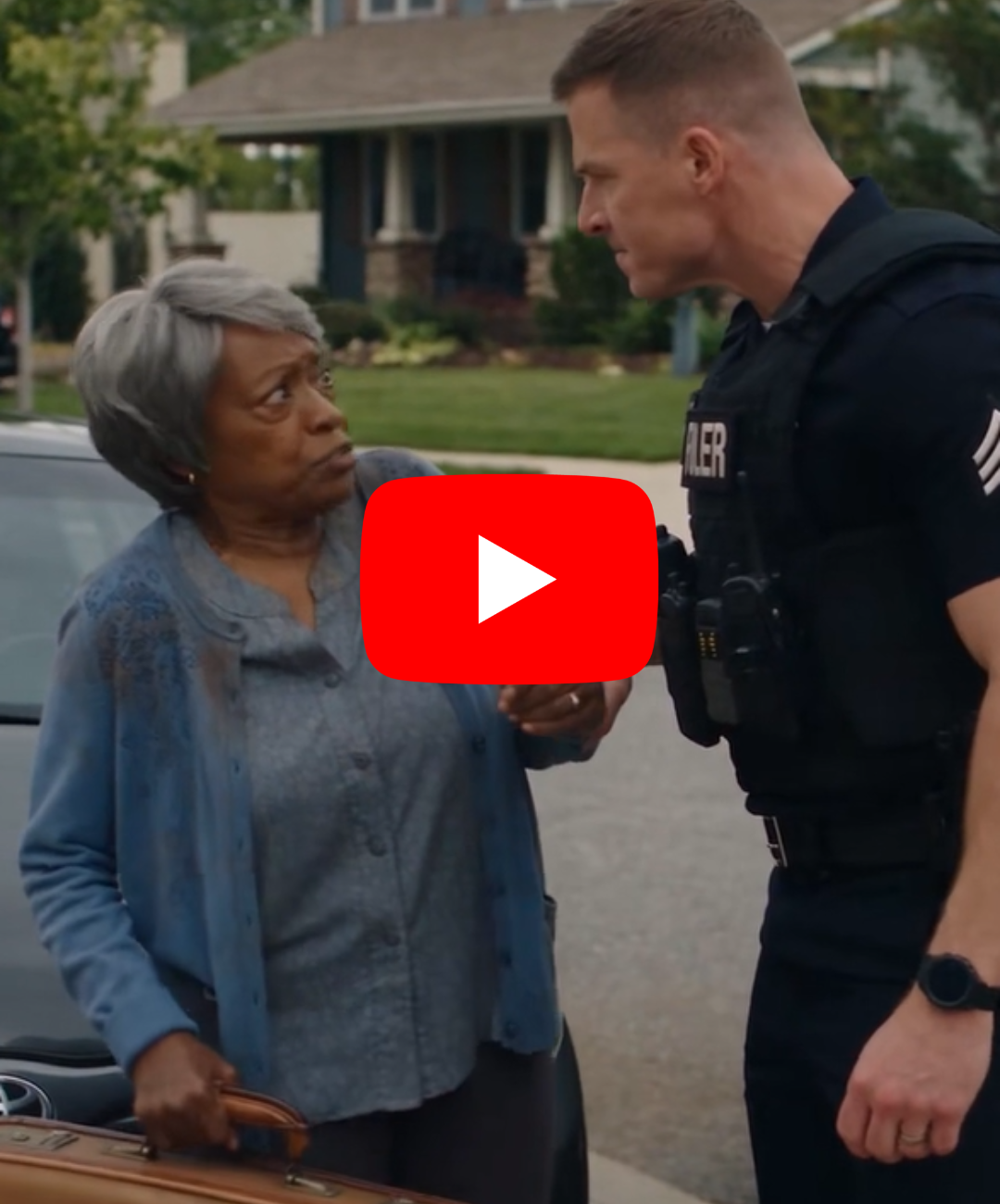
“GET YOUR BLACK HANDS OFF THAT SUITCASE! YOU'RE NOT GOING ANYWHERE UNTIL I SAY SO!”
Officer Ryan Fowler shouted those words before grabbing my arm and forcing me against his patrol car.
I was sixty-seven years old.
My wrists were trembling.
My grandchildren were crying from the front porch.
And my daughter-in-law, Claire, stood several feet away with her arms folded, watching as though the scene had finally given her what she wanted.
Six weeks earlier, she had called me desperate.
Not angry.
Not demanding.
Desperate.
“Linda, I don’t know what we’re going to do.”
Her nanny had quit unexpectedly.
Claire had recently been promoted at work, and the new position meant longer hours, more travel, and a schedule that did not care whether Ethan needed to be picked up from soccer or Lucy had homework spread across the kitchen table.
My son Daniel worked long hours too.
Their lives had become complicated almost overnight.
I understood that.
Families go through seasons where everyone needs help.
I had spent most of my adult life being the person people called in those seasons.
Claire knew that.
“Just six weeks,” she told me.
That phrase mattered.
Six weeks.
Not indefinitely.
Not until they decided they no longer needed me.
Six weeks.
I had plans of my own.
That was the part nobody seemed interested in remembering later.
I was retired.
Not idle.
There is a difference.
After my husband James died four years earlier, I sold the large family home we had shared for decades and moved into a smaller condominium outside Atlanta.
For the first time in my life, the calendar belonged mostly to me.
I had started taking Tuesday yoga classes.
Joined a book club.
Met old friends for lunch without checking whether someone else needed dinner cooked first.
Three women I had known for years were planning a reunion in Santa Fe.
After that, I had been dreaming about Bali.
James and I had talked about going for years.
We had saved photographs.
Hotels.
Beaches.
Places we would visit once work slowed down.
Work never slowed down enough.
Then he died.
For a long time, I could not even look at those photographs.
Eventually, I could.
That felt like progress.
My passport was ready.
The trip was becoming real.
Then Claire called.
I looked at the open laptop on my table.
A photograph of blue water filled the screen.
Then I pictured Ethan and Lucy.
Ten and eight.
My grandchildren.
“Six weeks?”
I asked.
“Absolutely.”
I closed the laptop.
“All right.”
Claire sounded relieved.
“You’re saving us.”
I smiled.
At the time, I believed I was helping.
The first two weeks were almost pleasant.
Ethan talked nonstop on the drive home from school.
Lucy liked to sit at the kitchen island while I cooked and tell me everything that had happened in her classroom, including things her teacher probably never intended to become family news.
I made dinner.
Helped with homework.
Folded a little laundry.
It felt temporary.
That mattered.
Temporary help is different from becoming invisible labor.
Claire thanked me.
Daniel hugged me.
The kids were happy.
I thought we had an understanding.
Then the language started changing.
“Would you mind picking up groceries?”
became
“We’re out of milk.”
“Could you help with laundry today?”
became
“The towels need folding.”
By the fourth week, Claire barely asked at all.
She left notes.
Yellow paper on the kitchen counter.
LUCY: PICKUP 2:45.
ETHAN: SOCCER 5:00.
CHICKEN IN FRIDGE.
LAUNDRY NEEDS FOLDING.
No greeting.
No thank-you.
No question about whether I had plans.
Just instructions.
I stared at one of those notes for a long time.
Then I did everything on it.
That was my mistake too.
Not helping.
The silence.
Every time I swallowed irritation for the sake of peace, I taught them that I would probably swallow the next thing too.
Groceries became my responsibility.
Then meals.
Then laundry.
Then weekend childcare.
Then errands.
Then the little things people do not notice until someone stops doing them.
Replacing toothpaste.
Remembering school forms.
Buying snacks.
Cleaning a spill before anyone else saw it.
Claire and Daniel began moving through their own home as though all of those things simply happened.
And because I was retired, they started acting as though my time had no value.
One evening, I reminded Daniel that I needed to return to my condominium for a dental appointment.
He frowned.
“Tuesday?”
“Yes.”
“But Tuesday is your day with the kids.”
I looked at him.
“My day?”
“You know what I mean.”
“No.”
He sighed.
“Mom, you pick them up Tuesdays.”
“I volunteered to pick them up.”
“Right.”
“That is not the same as being assigned.”
He rubbed his forehead as if I were creating an unnecessary problem.
“Can’t you reschedule?”
“Why would I?”
He looked at me.
Then said it.
“Because you’re retired. It’s not like you have somewhere important to be.”
I slowly lowered the glass in my hand.
For a few seconds, I simply looked at the man standing in front of me.