“This beach is for respectable families, not women like you! Pack your things and get out!”
Officer Brent Lawson’s voice carried farther than he probably intended.
Or maybe exactly as far as he intended.
Across the white sand.
Past the umbrellas.
Into the private cabanas where people had been drinking iced coffee and pretending not to notice one another.
Danielle Cross slowly lowered her sunglasses.
For a moment, she said nothing.
She had been sitting beneath a white beach umbrella at an exclusive South Florida resort, one hand resting near a book she had barely opened.
It was supposed to be quiet.
That was the entire reason she had come.
Danielle was thirty-six years old.
A Black American attorney.
And she had spent most of the previous two years living by calendars, depositions, conference calls, court deadlines, and the constant vibration of a phone that seemed determined to prove nobody else's emergency could wait until morning.
This vacation had been difficult to schedule.
Even harder to protect.
She had paid for a private beachfront cabana because she wanted one day in which nobody needed anything from her.
No witness preparation.
No late-night filings.
No client asking whether a judge had ruled yet.
No investigator calling with one more development.
Just sun.
Salt air.
A chair.
And silence.
Then Officer Brent Lawson walked onto the sand and decided she did not belong there.
“Excuse me?”
Danielle’s voice remained calm.
Lawson planted his feet several yards away.
“You heard me.”
He swept one hand toward the resort.
“People pay good money to keep this place classy.”
A few guests turned their heads.
Danielle looked around once.
Then back at him.
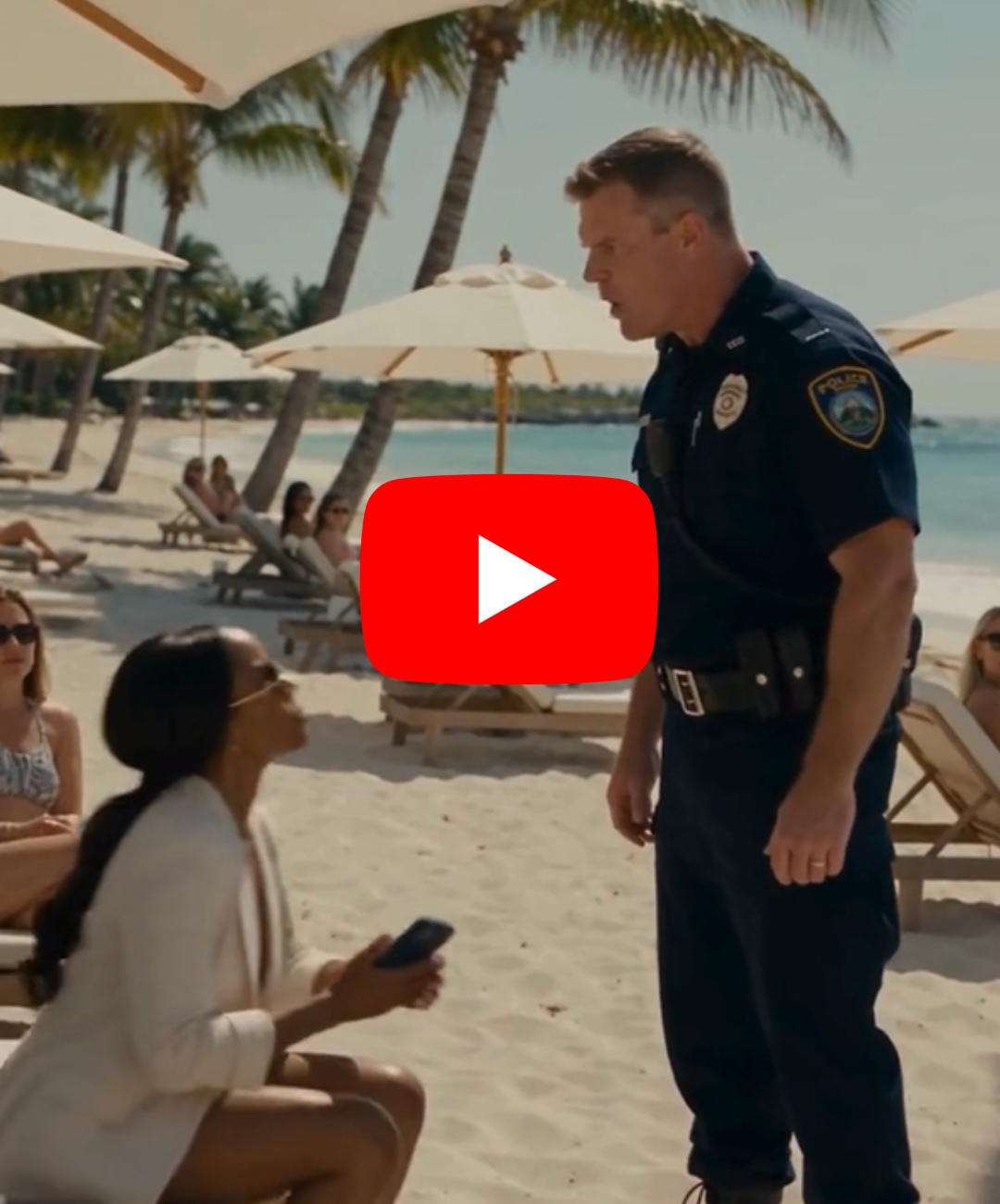
“I paid for my cabana.”
Lawson gave a short laugh.
“Sure you did.”
He looked her up and down.
“Let me guess. You’re somebody’s housekeeper enjoying a day off?”
The insult hung in the humid air.
A woman two umbrellas away stopped applying sunscreen to her arm.
A man near the boardwalk looked down at his phone, suddenly fascinated by the screen.
Danielle had seen that reaction before.
Not this exact scene.
But the moment when strangers realized something ugly was happening and began calculating whether they wanted the inconvenience of becoming witnesses.
She reached into her beach bag.
“My reservation is right here.”
Lawson moved before she finished.
His hand struck the phone.
It fell onto the towel beside her chair.
A nearby woman gasped.
Danielle stared at him.
Something in her face changed.
Not fear.
Precision.
“Officer, you’re harassing me because of my skin color.”
Lawson stepped closer.
“Watch your mouth.”
Danielle did not move.
“People like you always make everything about race.”
He said it loudly enough for everyone nearby to hear.
Then he reached for her arm.
His fingers closed around it.
Danielle flinched.
“Let go of me.”
“Ten seconds.”
“What?”
“I’m giving you ten seconds to pack your things.”
His grip tightened.
“After that, I arrest you for trespassing.”
Danielle looked down at his hand.
Then back at his face.
“I have a paid reservation.”
“I don’t care what you claim to have.”
“Then verify it.”
Lawson smiled.
“Maybe a night in jail will teach you where you belong.”
That was when a voice came from behind him.
Firm.
Older.
Controlled.
“Officer, release that woman immediately.”
Lawson turned.
An older man had risen from Cabana Twelve.
White linen shirt.
Khaki trousers.
No shoes.
Until that moment, he had looked like any other wealthy vacationer enjoying privacy beneath the resort’s shaded beachfront structure.
He walked toward them.
Lawson’s expression shifted from annoyance to impatience.
“Sir, please stay out of police business.”
The older man did not stop.
“My name is Judge William Harrington.”
Lawson gave a nervous laugh.
“Congratulations.”
He pointed toward the cabana.
“Now step aside.”
The man reached into the pocket of his linen shirt.
Slowly.
Deliberately.
Then produced identification.
“United States District Judge William Harrington.”
Silence moved across the beach.
Danielle looked up sharply.
“Your Honor?”
Judge Harrington nodded.
“Ms. Cross, are you injured?”
Lawson released some pressure without fully letting go.
Then he looked between them.
“You two know each other?”
Harrington’s expression became colder.
“She is the attorney representing a key witness in a federal civil rights case involving your department.”
Lawson’s hand came off Danielle’s arm.
Immediately.
The change was so fast it told its own story.
Danielle rubbed the place where he had been gripping her.
She kept her eyes on him.
For the first time since he approached, Officer Lawson looked uncertain.
But Harrington was not finished.
“I personally reviewed the emergency protective order issued for Ms. Cross yesterday.”
Danielle’s stomach tightened.
That sentence made the beach disappear around her.
Not literally.
The waves were still there.
The umbrellas.
The sun.
The vacationers.
But none of it mattered anymore.
“Your Honor, why are you here?”
Harrington looked past Lawson toward the resort entrance.
“Because federal investigators received credible information that someone intended to intimidate you today.”
Danielle stared at him.
Then toward the boardwalk.
Three men in dark suits were already approaching.
They had not been running.
That somehow made their arrival more serious.
Measured steps.
Eyes scanning the beach.
One of them spoke quietly into an earpiece.
Lawson reached for his radio.
The first man raised a credential.
“Officer Lawson, do not leave.”
Lawson froze.
Danielle looked at Harrington.
“What’s happening?”
The judge’s expression hardened.
“Ms. Cross, the officer who stopped you wasn’t randomly assigned to this beach.”
He paused.
“Someone specifically ordered him to find you.”
Danielle felt the words land one by one.
Not random.
Not a coincidence.
Not one officer deciding she did not fit the image of an expensive resort.
Someone had sent him.
The federal agent closest to Lawson stepped forward.
“Officer, keep your hands where we can see them.”
Lawson looked offended.
“You don’t understand what’s happening.”
The agent’s face did not change.
“That is why you’re going to explain it.”
Danielle sat down slowly.
Her knees had become less reliable than she wanted anyone to notice.
Five minutes earlier, she had believed she was dealing with racial harassment from an arrogant officer.
That was bad enough.
Now the situation had widened.
Her case.
The witness.
The protective order.
And someone with enough access to know exactly where she would be.
Danielle looked at Harrington.
“When did you know?”
“Late last night.”
“You knew somebody might come after me?”
“We knew there was a risk of intimidation.”
“That is not the same sentence.”
Harrington accepted the criticism.
“No.”
She stared at him.
“You should have called me.”
“The order was sealed.”
“I’m the person being protected.”
“I know.”
“Then why am I learning this on a beach after a police officer grabbed me?”
Harrington did not answer immediately.
That frightened her too.
Judges usually had answers.
Even when those answers were limited.
Especially federal judges.
The fact that Harrington seemed to be choosing his words told Danielle the problem extended beyond one bad decision.
The civil rights case had been difficult from the beginning.
Not because the law was complicated.
Because the people involved were frightened.
Danielle represented a key witness.
A person whose testimony could connect several internal incidents within the same police department.
Complaints that had once looked separate.
Stops.
Searches.
Arrests.
Allegations of intimidation.
Reports that had been altered after supervisors reviewed them.
Patterns mattered in civil rights litigation.
So did people willing to explain those patterns under oath.
That willingness came at a cost.
Danielle had spent months telling her client the same thing.
“We document everything.”
Every phone call.
Every unfamiliar car.
Every message.
Every encounter that felt slightly wrong.
Because intimidation rarely arrived wearing a sign.
Sometimes it looked like coincidence.
A patrol car parked too long near a house.
An employer receiving an anonymous complaint.
A relative being questioned about something unrelated.
A traffic stop that lasted forty minutes.
Nothing big enough alone.
Together, they could become a message.
Danielle knew that professionally.
Until that morning, she had not fully understood that the same machinery might be pointed at her.
Lawson looked toward the resort entrance.
Then at the three federal agents.
“This is ridiculous.”
The lead agent stepped closer.
“Were you assigned here today?”
Lawson hesitated.
“Yes.”
“By whom?”
“Dispatch.”
“Which supervisor?”
Lawson’s jaw tightened.
“I don’t remember.”
Danielle almost laughed.
Not because anything was funny.
Because it was the kind of answer witnesses gave when they desperately needed time.
“You don’t remember who assigned you to an exclusive private resort?”
Lawson glared at her.
The federal agent turned.
“Officer, don’t address Ms. Cross unless I ask you to.”
Lawson’s face reddened.
Several guests were openly watching now.
The same people who had looked away earlier were suddenly paying attention because the power inside the scene had changed.
Danielle noticed.
She wished she did not.
When Lawson had been humiliating a Black woman beneath an umbrella, people hesitated.
When federal credentials appeared, everyone became interested.
That detail would stay with her.
Harrington stepped closer.
“Danielle.”
It was the first time he used her first name.
“You need to come inside.”
She looked toward her beach bag.
“My things.”
“We’ll have someone collect them.”
“No.”
He paused.
“No?”
“I’m not walking away from my property while everybody treats me like evidence.”
She picked up her phone.
The screen was cracked at one corner.
Still working.
She held it up.
“This is what he knocked out of my hand.”
One of the agents looked over.
“We’ll photograph it.”
Danielle nodded.
Her attorney brain had taken over because the alternative was admitting how shaken she felt.
Document.
Preserve.
Do not speculate.
Do not let adrenaline write the first draft of what happened.
She looked at the red marks beginning to appear on her arm.
“Photograph this too.”
The agent nodded.
Lawson scoffed.
“I barely touched her.”
Danielle looked at him.
“You threatened to arrest me for trespassing from a cabana I paid for.”
“You were being uncooperative.”
“I offered you my reservation.”
“You reached into a bag.”
“For my phone.”
“I didn’t know what you were reaching for.”
“You knocked it down after you saw it.”
Lawson opened his mouth.
The federal agent interrupted.
“That’s enough.”
Judge Harrington looked toward the cabana.
Another agent had already started speaking quietly to resort security.
Danielle watched the resort manager arrive.
His face looked terrified.
Not because of what had happened to her.
Because a federal judge was standing on his beach.
That realization irritated her too.
She had paid.
That should have been enough.
Her name should have been enough.
Her word should have been enough to at least verify a reservation before humiliation became physical.
A judge should not have been required to make her credible.
But that was not the immediate problem anymore.
The immediate problem was the order.
Someone had sent Lawson.
Danielle followed Harrington into Cabana Twelve.
The interior was cool.
A small ceiling fan turned overhead.
Two unopened bottles of water sat on a table.
Judge Harrington pulled out a chair.
Danielle stayed standing.
“Tell me exactly what you know.”
He looked toward the agent entering behind them.
The man closed the canvas partition for privacy.
“My name is Agent Marcus Bell.”
Danielle nodded.
“Then tell me exactly what you know, Agent Bell.”
Bell glanced at Harrington.
The judge gave a slight nod.
Bell opened a slim folder.
“Yesterday afternoon, federal investigators intercepted information indicating that an attempt might be made to pressure either your client or someone connected to the legal team.”
“Pressure how?”
“That wasn’t clear.”
“Threats?”
“Possible.”
“Physical?”
“Also possible.”
Danielle’s stomach tightened again.
“And nobody called me.”
“We were trying to identify the source.”
“That worked beautifully.”
Bell accepted the criticism without reacting.
“Your movements were supposed to be known to a very limited number of people.”
“They were.”
“Who knew about this trip?”
Danielle began counting.
Her assistant.
Her client.
One investigator working with the legal team.
Her hotel confirmation had been handled through the firm.
A colleague knew she was taking two days off.
And—
She stopped.
Bell noticed.
“Who else?”
Danielle looked toward the canvas wall.
Outside, she could hear distant voices.
“Someone involved with witness security logistics.”
Bell’s expression gave nothing away.
“How many people?”
“Very few.”
That was the problem.
The fewer names on the list, the worse each possibility became.
Judge Harrington sat across from her.
“The emergency order was issued because investigators believed confidential scheduling information had been compromised.”
Danielle stared at him.
“What scheduling information?”
“Related to the witness.”
Her voice dropped.
“My client’s location?”
“We don’t believe the current location was exposed.”
“Don’t believe?”
“Danielle—”
“No.”
She raised a hand.
“Not judge language. Tell me what you know.”
Harrington held her eyes.
“We have evidence someone accessed restricted information they were not supposed to access.”
There.
That was the sentence.
The case was no longer only about intimidation.
It was about access.
Someone close enough to the process to see information protected from almost everyone else.
Danielle sat.
Finally.
“What information did they see about me?”
Bell opened another page.
“Travel schedule.”
Her mouth went dry.
“My resort?”
“Yes.”
“My cabana?”
A pause.
“Yes.”
Danielle looked toward the beach.
Cabana Twelve.
Her own cabana was several spaces away.
Specific enough for Lawson to walk directly to her.
Specific enough for someone to know exactly where she would be sitting.
“Was my room number compromised?”
“We have no indication of that.”
“That is not an answer.”
“No verified indication.”
She closed her eyes briefly.
The vacation was over.
That much was obvious.
Maybe safety had ended earlier.
She had simply not known.
Outside, raised voices broke through the cabana wall.
Lawson.
“I want my union representative.”
Bell stood.
“You’ll get whatever process applies.”
Lawson said something else Danielle could not hear.
Then another agent responded.
Harrington watched Bell leave.
Danielle remained seated.
For a minute, neither she nor the judge spoke.
Finally she asked:
“Did you come here because of me?”
“Yes.”
“You personally?”
“Yes.”
“Why?”
Harrington looked uncomfortable.
That answer interested her.
“A federal judge doesn’t normally sit in a beach cabana waiting to see whether a protected attorney gets harassed.”
“No.”
“So why were you?”
He looked toward the opening.
“Because I signed the order.”
“That still doesn’t explain it.”
“No.”
She waited.
Harrington folded his hands.
“The information came too late to arrange what I considered adequate protection without making the situation obvious.”
“So you decided to vacation beside me?”
“Something like that.”
Despite everything, Danielle almost smiled.
“You are very bad at covert operations.”
“I’m a judge.”
“Exactly.”
His expression softened briefly.
Then disappeared.
“There was another reason.”
Danielle waited.
“We didn’t know whether the person approaching you would be civilian.”
“Or police.”
“Yes.”
That brought Lawson back into the center of everything.
“Was he already under investigation?”
Harrington did not answer directly.
Danielle immediately noticed.
“Your Honor.”
“His department is the subject of the civil rights matter before me.”
“That isn’t what I asked.”
“No.”
She leaned forward.
“Was Brent Lawson already on the federal radar?”
Harrington looked toward the canvas partition.
“His name had appeared in material investigators were reviewing.”
Danielle exhaled.
That meant Lawson recognizing her probably was not chance.
It meant someone might have chosen a familiar officer because he already understood what was at stake.
Or because he could be trusted to follow an instruction without asking questions.
Neither possibility helped.
A resort employee quietly entered with Danielle’s bag and damaged phone.
The woman looked embarrassed.
“I’m very sorry, Ms. Cross.”
Danielle accepted the bag.
“Thank you.”
The employee left.
Danielle checked inside.
Wallet.
Book.
Sunglasses case.
Everything appeared intact.
Her hand stopped near a side pocket.
Something felt wrong.
She pulled out a folded slip of paper.
“I didn’t put this here.”
Harrington stood.
“Don’t open it.”
Danielle froze.
Bell was called back immediately.
Gloves.
Evidence bag.
Photographs.
The casual beach afternoon had become an evidence collection scene.
The note remained folded.
Nobody opened it in front of her.
“What does it say?”
Bell looked at her.
“We’ll process it first.”
“You’re joking.”
“No.”
“Someone put a note in my bag while I was sitting ten feet away?”
“We don’t know when it was placed there.”
Danielle stared at him.
“How long have you been watching me?”
“Long enough that I’m concerned we didn’t see that happen.”
That answer chilled her more than the note itself.
Someone had moved around people trained to watch.
Or planted it before surveillance began.
Either way, this had been planned.
Lawson was no longer the entire event.
He might have been a distraction.
Danielle looked toward Harrington.
“Was he supposed to arrest me?”
“We don’t know.”
“Was he supposed to scare me?”
“We don’t know.”
“Then what do you know?”
Bell returned from the entrance.
This time his expression had changed.
“We know Officer Lawson received a direct instruction this morning.”
Danielle stood.
“From whom?”
Bell held a phone in one hand.
Lawson’s phone.
Apparently surrendered or seized as part of whatever procedure was unfolding outside.
“There’s a message thread.”
“With his supervisor?”
Bell looked at Harrington.
Then back at Danielle.
“No.”
“Someone in the department?”
“No.”
Danielle’s stomach tightened.
The list of possibilities inside her mind began shrinking.
“Who?”
Bell hesitated.
Just for a second.
But Danielle knew what hesitation meant.
The name mattered.
Maybe more than he wanted to say in front of her.
“Agent Bell.”
He inhaled.
“The instruction was specific.”
“What did it say?”
Bell read from the screen.
“Locate Danielle Cross at the resort. Separate her from public areas if possible. Create enough pressure that she understands continuing the case has consequences.”
Danielle’s face went cold.
Harrington stood completely still.
There it was.
Not poor judgment.
Not misunderstanding.
Not random racism escalating into abuse.
A targeted instruction.
Delivered before Lawson approached her.
“Who sent it?”
Bell looked at her.
Danielle already felt afraid of the answer.
Because the people who knew where she was supposed to be that morning could be counted on one hand.
Her mind moved through them.
Assistant.
Legal investigator.
Firm contact.
Witness-security liaison.
People who had sat beside her.
People who had taken her calls.
People she had trusted with details precisely because she believed those details would never reach the department being sued.
Bell turned the phone so Harrington could see the sender information.
The judge’s expression changed.
Danielle noticed immediately.
“You know the name.”
Harrington did not answer.
Her pulse quickened.
“Your Honor.”
Bell lowered the phone.
“Ms. Cross, before I tell you this, I need you to understand that we are still determining whether the account itself was compromised.”
Danielle stared at him.
That qualification made things worse.
Not better.
“Tell me.”
Bell said the name.
For one second, Danielle thought she had misunderstood.
She asked him to repeat it.
He did.
The air seemed to leave the cabana.
Danielle knew that name.
Not from court filings.
Not from some list of officers she had spent months reviewing.
She knew it personally.
It belonged to the person she had trusted most with her client’s safety.
“GRIND THAT FAKE WEST POINT DIPLOMA INTO THE MUD! YOU THINK A BLACK KID FROM THIS BLOCK GRADUATED FIRST IN HIS CLASS?”
Officer Bradley Vance said it loudly enough for the neighbors to hear.
Then he put his boot directly on the diploma.
The gold-embossed parchment disappeared beneath black leather.
Rainwater had already gathered along the edge of Elmira Avenue, turning dust near the curb into thin brown mud.
Vance twisted his foot.
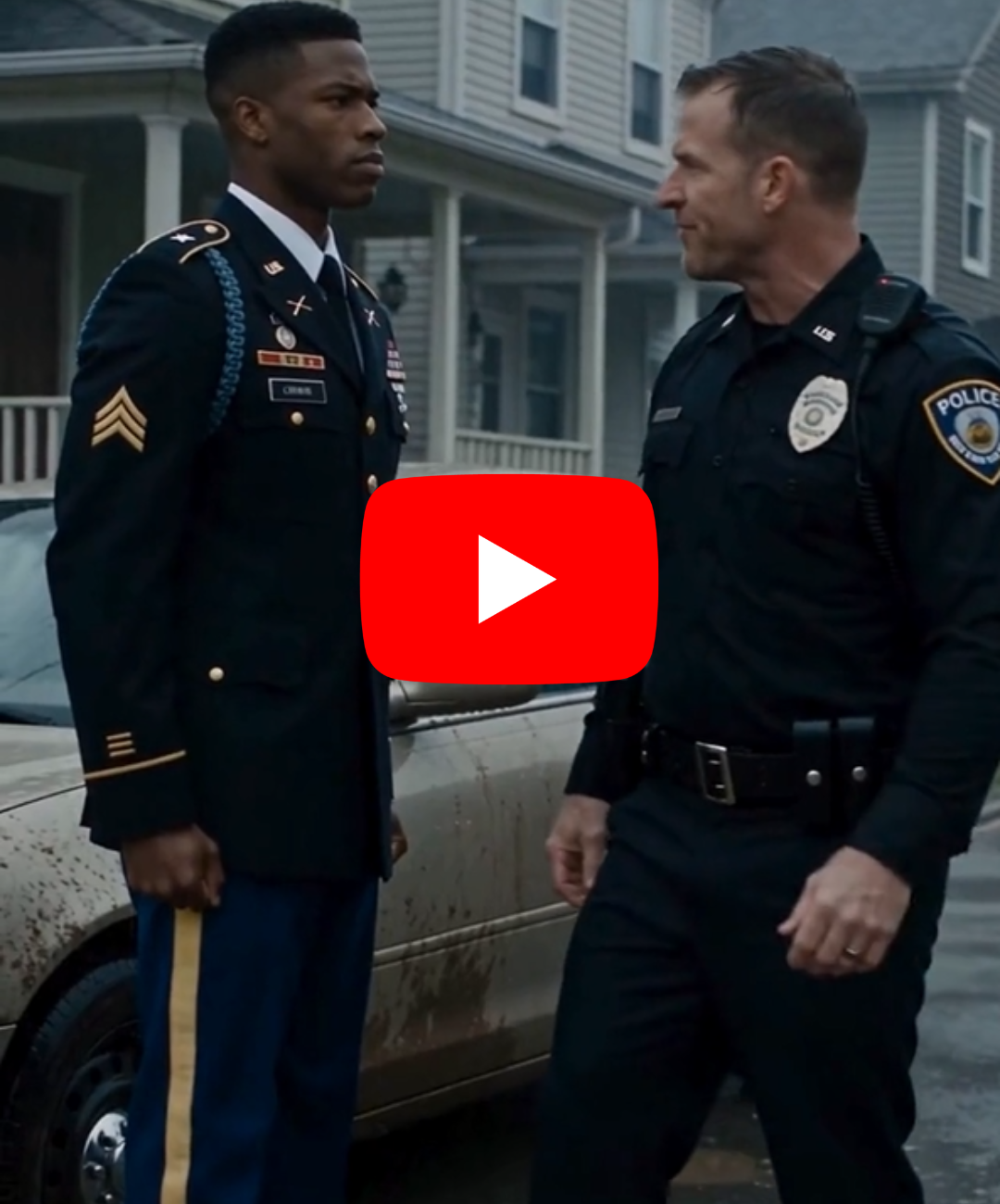
The paper folded.
Creased.
Then sank into dirty water.
Second Lieutenant Luke Cole stood beside his battered sedan and watched the diploma he had carried across the graduation stage forty-eight hours earlier disappear beneath a police officer’s boot.
He was twenty-two years old.
Full dress uniform.
White gloves.
Shoes polished carefully that morning.
His mother was waiting three streets away.
She had cooked dinner.
She had also placed an empty picture frame on the kitchen table because Luke had promised her something before leaving West Point.
She would be the first person back home to hold his diploma.
Now it was lying in a puddle.
Luke kept his hands visible.
“Take your foot off it, Officer.”
His voice stayed level.
No shouting.
No sudden movement.
Nothing Vance could reinterpret later.
Vance laughed.
“That uniform came from a costume shop.”
One of the younger officers standing beside the patrol cruiser smirked.
Vance looked Luke over slowly.
“Boys from your neighborhood don’t finish at the top of West Point.”
He pressed harder with his boot.
“They finish in a cell.”
The words settled across the street.
A porch door had opened across from them.
An older woman stood behind a screen.
Two teenagers had stopped beneath an awning.
Someone farther down the block was watching through a window.
Luke noticed all of it.
That was the point.
Vance wanted witnesses.
He wanted the humiliation public.
Luke understood that almost immediately.
What he did not understand was how a routine drive home had become this.
Less than fifteen minutes earlier, he had been thinking about his mother’s cooking.
Her name was Denise Cole.
She had raised him alone.
Worked double shifts when he was young.
Cleaned offices at night for several years while holding a daytime job at a medical supply warehouse.
She never described herself as sacrificing.
Luke only understood what she had given up after he became old enough to notice the details.
The winter coat she wore four years too long.
The tires she delayed replacing.
The way she ate after he did whenever money was tight.
The envelope of cash she pretended had “turned up” whenever he needed something for school.
Denise had never attended West Point.
Nobody in Luke’s immediate family had.
When his appointment came through, she read the letter three times before believing it.
Then she cried in the kitchen.
Not quietly.
Luke remembered standing there at seventeen with the appointment packet in his hand while his mother held his face between both palms.
“You did this.”
“We did.”
“No.”
She shook her head.
“You did this.”
That mattered to him.
So did the years after.
Training.
Academics.
Inspections.
Early mornings.
Late nights.
Pressure.
Expectations.
Mistakes.
Improvement.
Letters home.
Luke had written his mother constantly.
Sometimes long letters.
Sometimes only a page.
Denise saved every one.
He learned that only during his final year, when she admitted she had a box in her bedroom closet organized by semester.
When graduation approached, she told everybody who would listen.
Her son was graduating from the United States Military Academy.
Then Luke finished first in his class.
Denise had gone silent when he told her over the phone.
For several seconds, he thought the call had dropped.
“Mom?”
“I’m here.”
“You okay?”
“You’re first?”
“Yes.”
“In the whole class?”
Luke laughed.
“That is generally what first means.”
She started crying.
Two days after the graduation ceremony, Luke drove back toward the neighborhood where she still lived.
He could have stopped earlier.
Changed clothes.
Put the uniform away.
But Denise had specifically asked him not to.
Come straight home, baby.
I want to see it before you even take off your hat.
So he did.
The diploma rested inside a mahogany presentation case on the passenger seat.
His mother had seen photographs from graduation.
That was not enough.
Luke knew she wanted to hold the real thing.
Maybe place it inside the empty frame.
Maybe read every word even if she had already memorized them.
He was three streets from her house when the patrol car lights appeared behind him.
Red.
Blue.
Luke immediately pulled over.
No argument.
No delay.
He turned off the engine.
Lowered the window.
Kept both hands on the wheel.
The stop began with Officer Vance asking where he had stolen the car.
Luke thought he had misheard him.
“I didn’t steal it.”
Vance looked at the battered sedan.
Then Luke’s uniform.
“License and registration.”
Luke provided both.
His name matched.
The registration matched.
Vance still did not seem satisfied.
He asked why Luke was dressed that way.
Luke answered:
“I’m a second lieutenant in the United States Army.”
That was when the officer laughed.
Not smiled.
Laughed.
One of the younger patrolmen had arrived with another cruiser by then.
Luke could see him watching from several feet away.
Vance asked where Luke had served.
Luke explained that he had just graduated.
“From where?”
“West Point.”
Something in Vance’s expression changed.
Disbelief first.
Then something uglier.
He asked Luke to step out.
Luke complied.
The presentation case became visible when the passenger door opened.
Vance noticed it.
“What’s that?”
“My diploma.”
“From West Point.”
“Yes.”
Vance told him to bring it out.
Luke hesitated.
“Why?”
Vance’s tone changed.
“Because I told you to.”
Luke removed the case.
Opened it.
The diploma was there.
Official.
Gold embossed.
His name.
The institution.
Everything.
Vance stared at it.
Luke expected that to end the problem.
Instead, it seemed to make things worse.
The officer took the parchment.
Examined it.
Then said the words that had now drawn half the block’s attention.
“GRIND THAT FAKE WEST POINT DIPLOMA INTO THE MUD! YOU THINK A BLACK KID FROM THIS BLOCK GRADUATED FIRST IN HIS CLASS?”
And then the diploma was under his boot.
Luke looked down at it.
He felt anger.
Of course he did.
But anger was not permission.
He had spent years learning discipline in situations where emotion could ruin everything.
So he controlled his breathing.
Kept his stance neutral.
Hands visible.
“Take your foot off it, Officer.”
Vance laughed.
“That uniform came from a costume shop.”
The younger patrolman near the cruiser glanced at Luke’s white gloves.
Then snickered.
Luke saw it.
He also saw the second younger officer.
That man was not laughing.
He looked uncomfortable.
Eyes moving between Luke and Vance.
That mattered.
Luke filed it away.
Vance continued.
“Boys from your neighborhood don’t finish at the top of West Point.”
Then:
“They finish in a cell.”
Luke heard his mother’s voice in his head.
Not the one from childhood.
From that morning.
Come straight home, baby.
I want to see it before you even take off your hat.
He imagined her standing in the kitchen.
Checking the clock.
Maybe moving food from the oven.
Maybe looking down the street every time she heard a car.
She had no idea her son was three blocks away watching a police officer destroy the one object he had promised to place in her hands.
“The document is authentic.”
Luke spoke carefully.
“You can verify my commission.”
“I’m done verifying anything.”
Vance bent down.
Picked up the mahogany presentation case.
Luke’s pulse jumped.
“Officer.”
Vance looked at him.
Then deliberately struck the case against the curb.
Wood cracked.
The hinge split.
Luke flinched before he could stop himself.
That case had been in his hands during graduation.
Forty-eight hours earlier, he had crossed a stage carrying it while cameras clicked and cadets around him waited for their own names.
Now one side hung loose.
Vance grinned.
“There he is.”
Luke looked at him.
“The attitude.”
Vance dropped the damaged case.
Then his hand closed around his baton.
Luke’s body went very still.
Not fear exactly.
Awareness.
The street changed once the baton came out.
This was no longer only harassment.
No longer only destruction of property.
Luke understood escalation.
So apparently did the second younger officer, whose shoulders tightened near the cruiser.
Vance pointed downward.
“On your knees.”
Luke did not move.
He kept his hands where they could be seen.
“I haven’t threatened you.”
Vance stepped closer.
“I haven’t resisted you.”
Another step.
“I’m asking you to stop destroying my property.”
The baton came free.
A porch door across the street opened wider.
Someone said:
“Oh my God.”
Vance heard it.
He did not care.
Maybe the audience encouraged him.
The baton rose.
Luke watched his shoulder.
His wrist.
The angle.
Every instinct he had developed during training told him to calculate distance.
But another calculation mattered more.
He was in uniform.
On a residential street.
Facing a police officer.
His mother lived nearby.
Any movement could become a story someone else told later.
So he held position.
Vance raised the baton over his shoulder.
Then a new sound rolled down Elmira Avenue.
Low at first.
Rhythmic.
Engines.
Not one motorcycle.
Several.
The sound grew louder.
Vance glanced toward the intersection.
So did Luke.
Four military police motorcycles turned the corner in synchronized formation.
For several seconds, nobody on the street seemed to understand what they were seeing.
The lead motorcycle slowed.
Then the next.
Their formation tightened as they approached.
Behind them came three black official vehicles.
The convoy looked completely out of place on the wet residential street.
Luke recognized the markings first.
Military police escort.
His stomach tightened.
He knew a ceremonial delegation had been scheduled to make several public stops connected to the graduation class.
He had not expected one here.
Certainly not now.
The motorcycles slowed sharply when the lead riders saw the scene.
A young Army lieutenant.
Full dress uniform.
Standing beside a damaged sedan.
Police officer in front of him.
Baton raised.
Diploma in the mud.
The first black vehicle stopped.
Then the second.
Doors opened.
Soldiers stepped out.
Immaculate dress uniforms.
Umbrellas remained inside.
Nobody seemed to care about the rain.
Vance lowered the baton slightly.
His expression changed.
Not enough yet.
Then the rear door of the second official vehicle opened.
A four-star general stepped out.
Luke knew him immediately.
General Raymond Cole.
Army Chief of Staff.
Two days earlier, the general had congratulated Luke at graduation.
They had shaken hands.
There had been cameras.
A formal acknowledgment of Luke’s academic standing.
The general knew exactly who he was.
Vance apparently understood the insignia before he understood anything else.
The baton dropped so quickly it struck the officer’s own leg.
“General, sir.”
His voice changed completely.
The confidence disappeared.
“There’s been a misunderstanding—”
General Cole walked past him.
No response.
No acknowledgment.
He moved directly toward Luke.
Then stopped.
His eyes dropped.
The diploma lay partly submerged in muddy water.
Boot marks ran across the parchment.
The mahogany presentation case sat several feet away with its hinge split open.
The street had become almost perfectly silent.
Even the motorcycles had gone quiet.
One ceremonial press camera continued operating near the convoy.
Luke noticed it only after General Cole looked toward the ground.
The camera had apparently been active before the vehicles turned onto the street.
It was still broadcasting.
Vance noticed too.
His face changed again.
General Cole stepped toward the puddle.
Then, in front of Luke, the officers, the neighbors, the soldiers, and the camera, the four-star general knelt on the wet pavement.
Nobody spoke.
He reached into the muddy water.
Picked up the first damaged section of parchment.
Then another.
His gloves became wet.
The knees of his uniform trousers touched the pavement.
He did not hurry.
One piece.
Then another.
Luke stood motionless.
His eyes burned.
Not because of Vance now.
Because the contrast was almost too much to process.
One man had looked at the diploma and seen something Luke had no right to possess.
Another man, wearing four stars, knelt in the rain to retrieve it.
General Cole gathered the torn and soaked pieces carefully.
Then he stood.
Rain ran from the brim of his cap.
He turned toward Luke.
For a moment, the damaged diploma remained in his hands.
Then the general straightened.
Raised his right hand.
A crisp salute.
“Lieutenant Cole.”
Luke’s throat tightened.
“First in your graduating class.”
Nobody moved.
“Your Army is proud of you.”
Luke returned the salute.
His hand stayed steady.
His eyes did not.
Everything his mother had worked for.
Every double shift.
Every letter.
Every difficult year.
Every morning at the academy when quitting might have been easier.
All of it seemed compressed into that moment on Elmira Avenue.
Then General Cole lowered his hand.
Luke did the same.
Only then did the general turn toward Officer Vance.
The silence changed.
Vance stood beside his cruiser.
Baton now down.
His posture no longer aggressive.
His face pale.
“Officer.”
General Cole’s tone was calm.
That calm seemed worse than anger.
“You told this soldier his achievement was impossible because of where he came from.”
Vance opened his mouth.
Closed it.
“General, I—”
The general waited.
Nothing useful came.
One of the younger patrolmen looked toward the ground.
The one who had snickered earlier no longer looked amused.
General Cole turned toward both officers.
“You saw everything?”
Neither answered immediately.
Luke watched them.
So did the neighbors.
So did the soldiers.
And somewhere nearby, a ceremonial camera was still sending the scene beyond Elmira Avenue.
The uncomfortable younger officer shifted first.
He looked at Vance.
Then at the general.
Then at Luke’s destroyed diploma.
His jaw tightened.
“Yes, sir.”
Vance snapped toward him.
The patrolman did not look back.
General Cole held his gaze.
“All of it?”
The officer swallowed.
“Yes.”
Luke felt something shift in the street.
Not resolution.
Not yet.
But the isolation was gone.
Minutes earlier, he had stood alone while three officers controlled the scene.
Now witnesses were speaking.
A four-star general had seen the physical evidence.
The camera had recorded at least part of what happened.
The diploma was no longer only Luke’s word against Vance’s.
Vance seemed to understand that.
His confidence fractured visibly.
He stepped toward General Cole.
“I had reasonable concerns about identification.”
Luke said nothing.
General Cole looked at the broken presentation case.
Then toward the muddy parchment in his own hands.
Vance continued.
“The vehicle—”
“Was it reported stolen?”
The question came from one of the military personnel behind the general.
Vance hesitated.
“That isn’t the point.”
The younger officer looked at him.
That answer was worse than silence.
General Cole remained focused on Vance.
Luke could see his mother’s street from where he stood.
Almost.
Just beyond the next intersection.
She was still waiting.
Probably wondering why a drive that should have taken minutes was taking so long.
Luke imagined walking into her house without the diploma.
Having to explain why.
He looked toward the damaged parchment.
General Cole followed his gaze.
“We’ll preserve this.”
He said it quietly.
Luke nodded.
“Thank you, sir.”
Vance tried again.
“There was a misunderstanding.”
This time, Luke looked directly at him.
The officer had not misunderstood the diploma.
He had read it.
He had been offered verification.
He had chosen humiliation anyway.
General Cole did not argue.
He simply asked:
“Did Lieutenant Cole threaten you?”
Vance said nothing.
“Resist?”
No answer.
“Attempt to flee?”
The second younger officer looked away.
Vance finally said:
“He refused a lawful command.”
Luke kept silent.
General Cole turned toward him.
“Lieutenant?”
Luke answered the way he had been trained to report facts.
“I complied with the traffic stop.”
No embellishment.
“I provided identification and vehicle registration.”
Rain continued falling.
“I identified myself and offered verification of my commission.”
The general listened.
“Officer Vance took my diploma and damaged it.”
Luke looked toward the curb.
“He then ordered me to my knees after I asked him to stop destroying my property.”
“Did you threaten him?”
“No, sir.”
“Touch him?”
“No, sir.”
“Reach for a weapon?”
“No, sir.”
General Cole nodded.
Nothing more.
That restraint mattered.
He was not conducting a trial on a wet street.
He was establishing what people claimed to have witnessed.
Luke understood that.
Vance seemed to be losing patience with the process.
Or fear was beginning to look like impatience.
He glanced toward the press camera.
Then the neighbors.
Then his own patrolmen.
“Can we discuss this away from the crowd?”
General Cole looked around.
“You were comfortable addressing Lieutenant Cole in front of the crowd.”
Vance’s face flushed.
Nobody laughed.
That made it worse.
The younger officer who had admitted seeing everything shifted nearer the cruiser.
Luke could see tension in his expression now.
Not fear of the general.
Fear of what came next.
His partner had witnessed the same incident.
So had the camera.
So had the neighborhood.
Whatever loyalty had kept him silent earlier was now colliding with documentation.
Vance noticed him looking.
“Don't say another word.”
The command came quickly.
Too quickly.
General Cole’s expression hardened.
The younger officer froze.
Luke watched the exchange.
That was when he knew the scene had moved beyond what happened to him personally.
Vance was now worried about what his own officers might say.
The second patrolman, the one who had laughed at Luke’s gloves, stared down at the pavement.
His face had lost color.
Rainwater ran along the curb and around the toe of Vance’s boot.
The same boot that had ground the diploma into mud.
General Cole held the torn parchment carefully by its cleaner edges.
Luke thought of his mother again.
The empty frame.
He wondered whether the diploma could be restored.
Probably not.
Maybe replaced.
But it would never be the same document he had carried across the stage.
That hurt.
Then another thought came.
Maybe his mother did not need the perfect version anymore.
Maybe what mattered was what it represented.
Nobody on that street could take the achievement away.
Not a boot.
Not mud.
Not disbelief.
Not racism.
The paper had been damaged.
The truth had not.
General Cole glanced toward the lead military police officer.
A short exchange passed between them.
Professional.
Quiet.
Luke could not hear it.
The military police officer nodded.
Then took one step toward the local patrolmen.
Vance stiffened.
“General, with respect, military police have no jurisdiction over—”
“I’m aware of jurisdiction.”
General Cole did not raise his voice.
Vance stopped.
Again, the control in the general’s tone had more force than shouting would have.
“This soldier is standing on a public street.”
He looked toward the diploma.
“His property has been destroyed.”
Then toward the officers.
“Multiple witnesses are present.”
The ceremonial camera remained pointed toward them.
“And your own officer has confirmed he observed the encounter.”
Vance swallowed.
Luke could almost see him calculating.
What had been recorded?
When had the live camera started?
Had neighbors recorded earlier?
Had body cameras been running?
Luke wondered the same things.
But he did not ask.
One fact at a time.
That was enough.
The older woman behind the screen door stepped onto her porch.
She spoke louder than before.
“I saw him put that paper in the mud.”
Vance turned.
Another voice came from farther down.
“He hit that case on the curb too.”
Someone else:
“We heard what he said.”
The street had found its voice.
Luke remained still.
He did not feel triumphant.
Only tired.
Something about public humiliation leaves a strange exhaustion behind once the immediate danger begins to pass.
His shoulders hurt from holding them controlled.
His jaw ached.
He realized he had been clenching his teeth.
The general looked toward him.
“You all right, Lieutenant?”
“Yes, sir.”
Then Luke corrected himself.
“I will be.”
General Cole nodded once.
That seemed to be enough.
Vance took another small step backward.
For the first time since the stop began, Luke saw the officer look toward his cruiser as if he wanted to leave.
But the scene no longer belonged to him.
Then the radio clipped to Vance’s shoulder crackled.
Static cut across the silence.
Everyone heard it.
Vance reached toward the radio automatically.
A dispatcher’s voice broke through.
Sharp.
Urgent.
And as the first words came over the speaker, Vance’s face changed.
The message was loud enough for Luke, the general, the two patrolmen, and everyone standing nearest the cruiser to hear.
And whatever came across that police radio changed the entire scene.